 LLM Audit
Introduction:
Schema Markup for GEO is the technical foundation of AI search visibility in 2026. In the era of Generative Engine Optimization, visibility is no longer won by keywords alone — it is won by entities, structured data, and machine-readable clarity.
Humans read your compelling blog intros.
AI models like ChatGPT, Gemini, and Perplexity read your code.
They power Retrieval-Augmented Generation (RAG) systems that prioritize machine-readable certainty. If your content is unstructured text, AI must infer meaning. If you implement Schema Markup, you eliminate ambiguity and provide structured truth.
In 2026, structured data isn’t a ranking boost.
It’s the technical foundation of AI visibility.
Why Schema Markup for GEO Matters in 2026
AI search engines do not “search pages.”
They:
- Parse structured data
- Identify entities
- Build knowledge relationships
- Retrieve high-confidence facts
- Generate answers
Here’s how that looks conceptually:
User Question
      ↓
Entity Extraction
      ↓
Knowledge Graph Construction
      ↓
High-Confidence Source Retrieval
      ↓
Answer Generation
Without Schema:
“Apple” → ambiguous string → fruit? brand? record label?
With Schema:
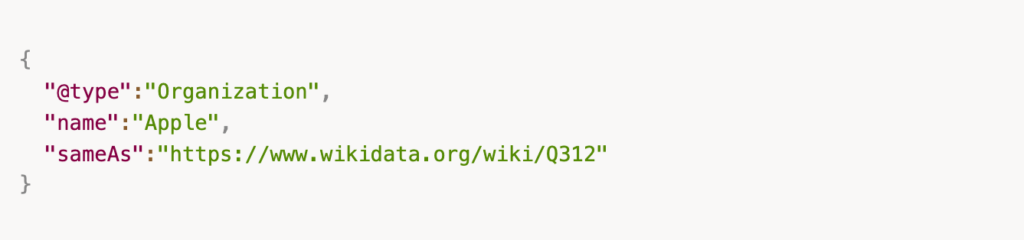
Ambiguity disappears.
You’ve just upgraded from guessable text to machine-certainty.
How Schema Markup for GEO Reduces AI Hallucinations
AI systems are penalized for hallucinating facts. Their retrieval pipelines prefer:
- Structured data
- Recognized entities
- Verifiable attributes
- Nested contextual relationships
Why this matters
If your competitor embeds:
- Product price
- Return policy
- Author credentials
- FAQ answers
…in Schema — and you bury yours in paragraphs?
The AI will cite them.
Not you.
The Core Schema Pack for AI Visibility (2026 Edition)
Below is the essential schema stack every serious GEO strategy requires.
1. Person + Organization (Authority Layer)
AI evaluates E-E-A-T signals through entity connections.
Minimum Implementation:
Person- name
- jobTitle
- worksFor
- sameAs (LinkedIn, Wikipedia, Twitter/X)
Organization- founder
- sameAs (social profiles)
- contactPoint
- logo
Why it Works
It connects your content to entities already present in AI training data.
Authority becomes graph-linked, not self-declared.
2. FAQPage (Direct Answer Feed)
AI thrives on structured Q&A.
| Without FAQ Schema | With FAQ Schema |
|---|---|
| AI extracts loosely | AI pulls exact Q/A pair |
| Risk of misinterpretation | 1:1 prompt match |
| Lower citation probability | High retrieval probability |
Optimization Tip
Keep answers:
- Under 75 words
- Fact-based
- Clear
- Definitive
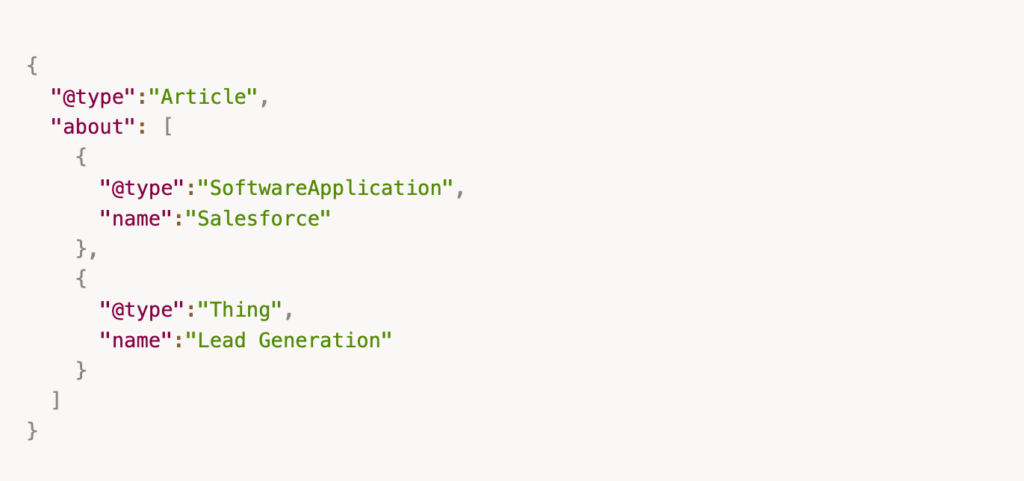
3. Article + mentions/about (Context Amplifier)
Standard Article schema is table stakes.
In 2026, entity tagging via mentions or about is mandatory.
Example:
Why It Works
You explicitly tell AI:
- Which entities are central
- How they relate
- What context to use during retrieval
This increases inclusion in AI Overviews and chatbot citations.
4. Product + MerchantReturnPolicy (Shopping Graph Dominance)
Google’s Shopping Graph is 100% structured-data driven.
If you’re in eCommerce, your schema must include:
offerspriceValidUntilshippingDetailshasMerchantReturnPolicyaggregateRatingreview
AI Product Comparison Logic
AI assistants compare structured attributes, not prose.
Here’s how AI evaluates product recommendations:
| Attribute Available in Schema | Included in AI Comparison |
|---|---|
| Price | ✅ |
| Return Policy | ✅ |
| Shipping Time | ✅ |
| Rating | ✅ |
| Text-only policy paragraph | ❌ |
If it’s not structured, it’s invisible.
Advanced Strategy: Nested Schema = Graph Alignment
Most SEO teams treat schema blocks like isolated islands.
That’s outdated.
In 2026, your schema must mirror how AI builds knowledge graphs.
Correct Nesting Structure
Organization
   └── Product
         └── Offer
         └── Review
   └── Article
         └── mentions
   └── Founder (Person)
This creates:
- Entity continuity
- Brand-level graph identity
- Higher ingestion efficiency
AI can absorb your entire brand ecosystem in one pass.
Visual: Structured vs Unstructured Retrieval Impact
Below is a conceptual performance comparison:
| Implementation Level | AI Citation Probability | Knowledge Graph Strength | AIO Inclusion Likelihood |
|---|---|---|---|
| No Schema | Low | Weak | Rare |
| Basic Schema | Medium | Moderate | Occasional |
| Nested + Entity-Rich | High | Strong | Frequent |
The Future: Schema + llms.txt
Schema tells AI:
What your content is.
llms.txt tells AI:
How to use it.
Think of llms.txt as:
- A crawler guidance file
- A structured content summary
- A priority map for AI systems
What llms.txt Should Include:
- Site summary
- Primary entities
- Links to schema-rich pages
- Citation preferences
- Update frequency
Together:
| Schema | llms.txt |
|---|---|
| Defines entities | Defines usage rules |
| Builds knowledge graph | Directs AI ingestion |
| Reduces ambiguity | Improves crawl clarity |
Combined, they form your AI visibility control layer.
Your 2026 GEO Action Plan
1. Audit
- Run Google Rich Results Test
- Identify missing schema types
- Check for validation errors
2. Strengthen Authority Graph
- Link authors to verified profiles
- Update Organization schema
- Add founder data
3. Implement mentions
- Tag brands
- Tag software
- Tag industry concepts
4. Nest Everything
- Review inside Product
- Product inside Organization
- Author inside Article
5. Deploy llms.txt
- Concise
- Entity-rich
- Structured link map
Final Takeaway
In 2026:
- Keywords influence rankings.
- Entities influence AI citations.
- Structured data determines machine trust.
Schema Markup for GEO is no longer optional — it is the infrastructure that determines whether AI systems trust, retrieve, and cite your content. By combining structured data, entity relationships, and a clear AI ingestion strategy, you turn your website into a machine-readable authority asset. To evaluate how well your site performs in AI environments, run it through our LLM Audit Tool and identify gaps in entity coverage and structured data implementation. You can then validate your improvements using Google’s official Rich Results Test tool to ensure your markup is technically sound and ready for AI retrieval.
Frequently Asked Questions
Generative Engine Optimization (GEO) is the process of optimizing content for AI-powered search engines like ChatGPT, Gemini, and Perplexity. It prioritizes structured data, entity clarity, and machine-readable signals rather than traditional keyword-only SEO.
Schema Markup provides structured context that AI systems use to understand entities, relationships, and facts. It increases the likelihood of being cited in AI Overviews and chatbot responses by reducing ambiguity.
AI systems prefer structured, high-confidence sources. By explicitly defining entities and attributes through Schema, you eliminate guesswork and provide factual certainty, lowering the risk of AI misinterpretation.
The essential Schema types include Person, Organization, Article (with mentions/about), FAQPage, Product, Offer, Review, and MerchantReturnPolicy. Together they create a complete entity graph for AI systems.
Nested Schema connects related entities, such as Reviews inside Products and Products inside Organizations. This mirrors how AI knowledge graphs structure data and improves retrieval efficiency.
llms.txt is an emerging AI crawler guidance file that summarizes key information about your website. When combined with Schema Markup, it strengthens AI ingestion, clarity, and visibility in generative search results.