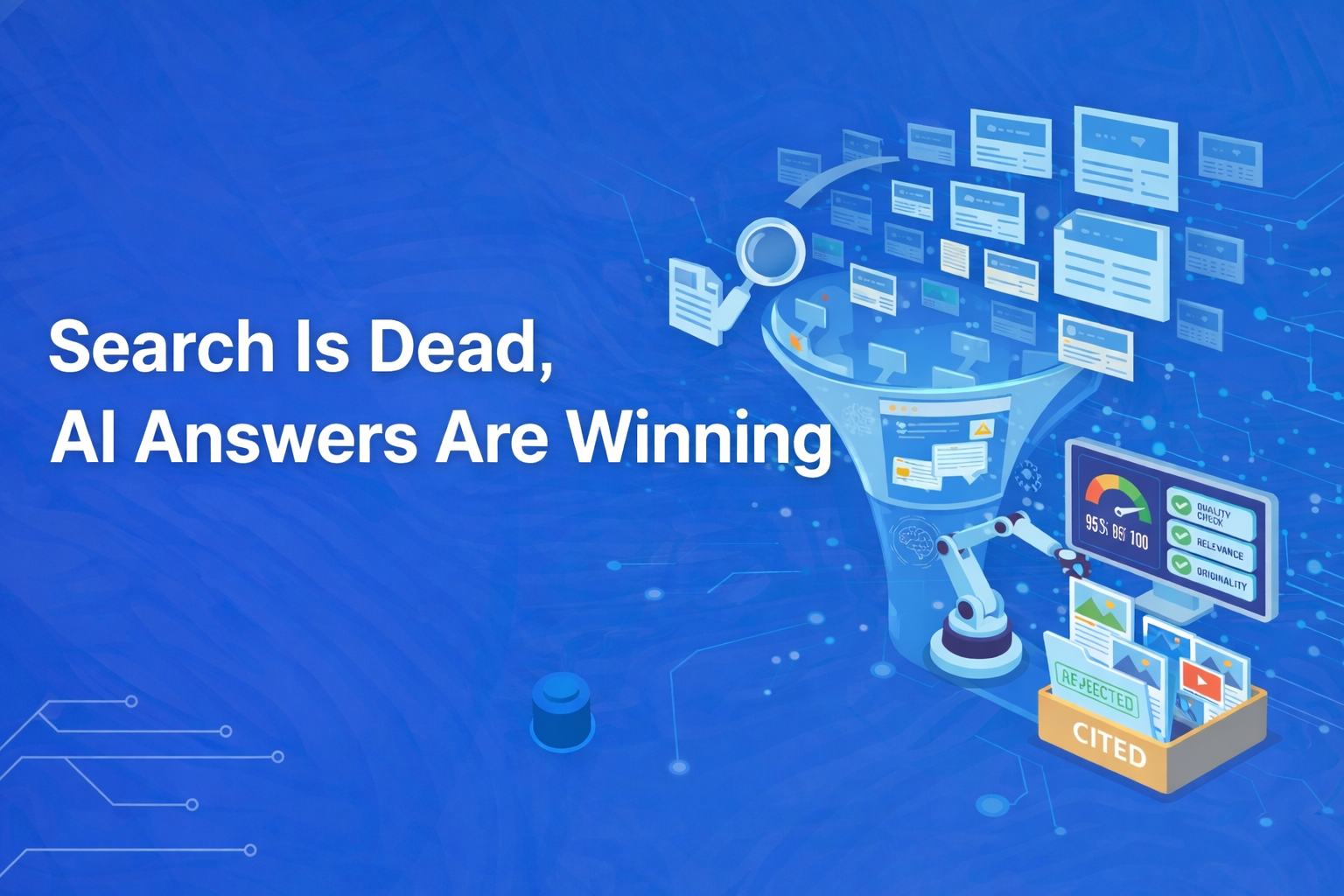
 LLM Audit
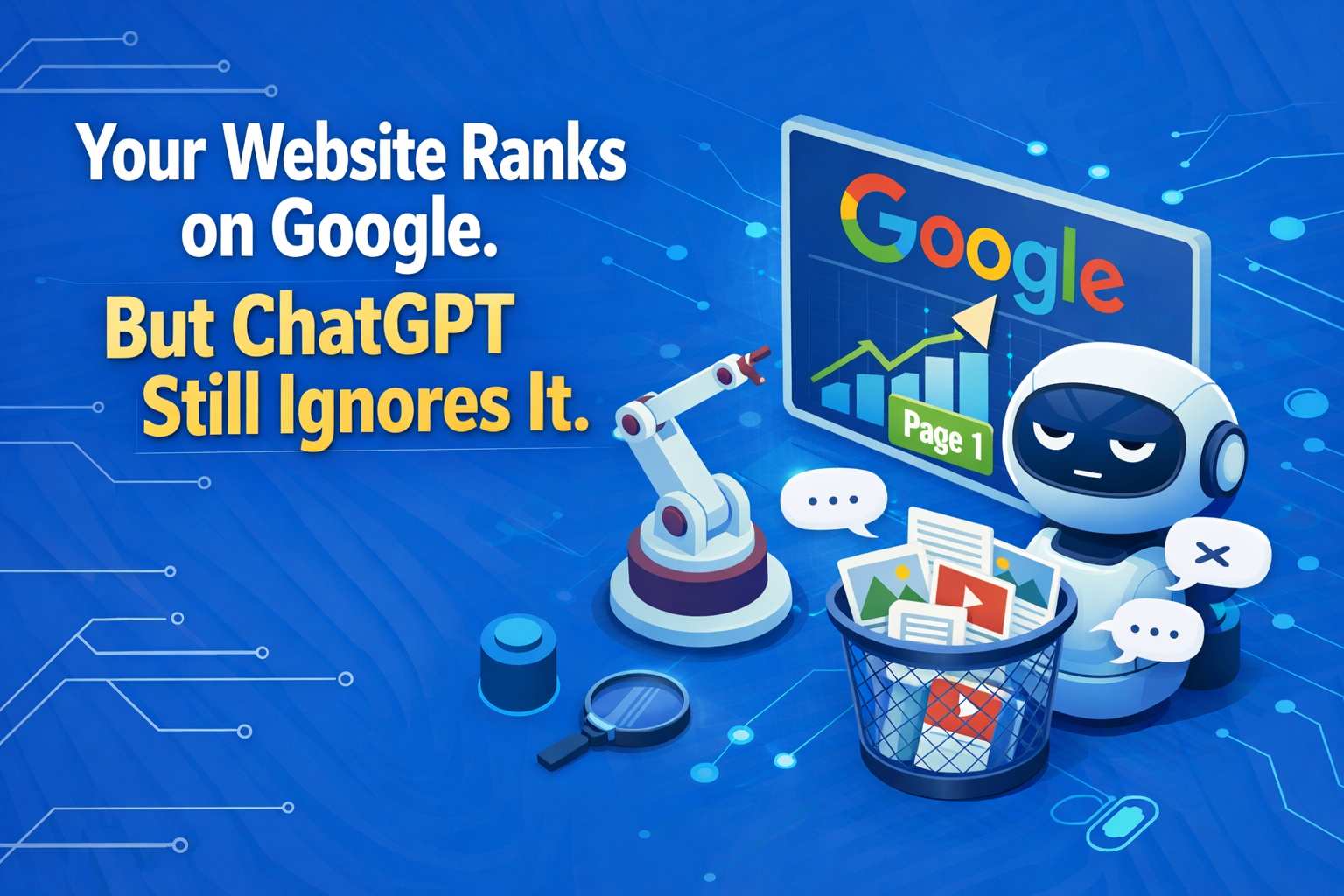
The Hidden Problem: Ranking on Google Isn’t Enough Anymore
You invested months optimizing your website for SEO.
But when someone asks ChatGPT, Perplexity, Gemini, or Claude about tools in your category — your brand never appears.
This isn’t bad luck.
It’s a visibility gap in the AI search ecosystem.
Modern buyers increasingly rely on AI assistants instead of search engines to discover products, tools, and services. If your website isn’t recognized by these systems, you’re effectively invisible in a rapidly growing discovery channel.
Why AI Search Is Changing Online Discovery
The traditional internet discovery model looked like this:
User searches on Google
Website ranks on page one
User clicks a link
Today, the process is different.
Millions of people now open AI assistants first and simply ask questions:
“What’s the best CRM for startups?”
“Which AI SEO tools should I use?”
“What platform is best for B2B lead generation?”
Instead of showing 10 blue links, AI systems generate a direct answer — and typically cite only 10–20 sources.
If your website isn’t among those sources, your brand disappears from the conversation.
Key AI Search Statistics You Should Know
74% of US consumers use AI tools before making purchase decisions
10–20 sources are typically cited per AI answer
44% of AI Overview citations come from pages outside Google’s top 20 results
This means Google rankings alone no longer guarantee visibility.
How LLMs Decide Which Websites to Cite
Traditional search engines rely on ranking algorithms.
Large Language Models (LLMs) operate differently.
They analyze vast datasets and build probabilistic associations between topics, brands, and trusted sources.
When a user asks a question, the AI generates an answer based on:
Topic relevance
entity relationships
structured data signals
trusted content sources
Instead of ranking pages at query time, LLMs predict which sources are credible during answer generation.
This is where Generative Engine Optimization (GEO) becomes important.
SEO vs GEO: The New Optimization Layer
SEO focuses on:
Keywords
backlinks
page rankings
search intent
GEO focuses on:
AI readability
entity clarity
structured data
content extractability
A website optimized only for SEO may still fail to appear in AI-generated answers.
The 4 Factors That Determine AI Visibility
Most websites miss at least three of these four signals.
1. Crawlability: Can AI Bots Access Your Site?
Before an AI model can cite your content, its crawler must access your website.
The three most important AI crawlers are:
GPTBot (OpenAI)
ClaudeBot (Anthropic)
PerplexityBot
If these bots are blocked in your robots.txt, your website may never enter their training or citation datasets.
Common mistakes
robots.txt accidentally blocking AI crawlers
developer rules from migrations not updated
rate limits or CAPTCHAs blocking non-browser bots
Best practices
Ensure that:
GPTBot, ClaudeBot, and PerplexityBot are allowed
key content is server-rendered HTML
canonical tags are correctly implemented
pages don’t rely entirely on JavaScript
If AI crawlers cannot read your content, nothing else matters.
2. Structured Data: The Language AI Systems Understand
Structured data (schema markup) tells machines what your content represents.
While schema improves Google rich results, it is even more critical for AI knowledge graphs.
Most important schema types
Organization
WebSite
Article / BlogPosting
FAQPage
BreadcrumbList
Person (author schema)
Without schema markup, your site becomes harder for AI models to classify and trust.
Why FAQ Schema Is Especially Powerful
FAQ schema converts content into structured question-answer blocks.
This format is perfect for AI systems because it allows them to extract clear answers instantly.
Many AI citations originate from pages that include FAQ structured data.
3. Entity Clarity: Does the AI Understand Your Brand?
AI systems organize information around entities.
Entities are identifiable things such as:
companies
products
people
technologies
If your website doesn’t clearly define what your company does, AI systems struggle to categorize it.
Signs of weak entity definition
vague homepage messaging
inconsistent brand naming
missing organization schema
no author pages or author bios
lack of third-party references
A clear entity definition should answer:
Who are you?
What category are you in?
Who do you serve?
What problem do you solve?
4. Content Extractability: Can AI Summarize Your Page?
AI models prefer content that is easy to extract and summarize.
Pages that perform well in AI citations usually have:
clear headings (H1 → H2 → H3)
short structured paragraphs
direct claims and definitions
logical content hierarchy
Quick test
Paste your article into ChatGPT and ask:
“Summarize this page.”
If the answer is vague or inaccurate, your content likely has low extractability.
The SEO vs AI Visibility Gap
This is why many companies feel confused.
Their SEO metrics look healthy:
strong rankings
high domain authority
increasing organic traffic
But their brand never appears in AI answers.
That’s because traditional SEO tools do not measure:
AI crawler accessibility
schema completeness
entity clarity
extractable content structure
These signals matter heavily for LLM citation probability.
How LLMAudit.ai Finds These Issues Instantly
LLMAudit.ai analyzes the factors that influence AI citations.
When you scan a website, the system checks:
AI crawler accessibility
Verifies if GPTBot, ClaudeBot, and PerplexityBot can access your pages.
schema markup coverage
Detects missing or misconfigured structured data.
entity clarity score
Evaluates how clearly your brand identity is defined.
content summarizability
Measures how easily AI models can extract insights.
JavaScript rendering issues
Identifies content visible to users but invisible to AI crawlers.
Run a Free AI Visibility Audit
You can analyze your website in under 30 seconds.
The tool provides:
AI crawler access status
schema implementation report
entity clarity analysis
extractability recommendations
No signup required.
Run your free audit at LLMAudit.ai
What To Fix First After Your Audit
1. Fix crawlability
Ensure AI crawlers are not blocked in robots.txt.
2. Implement schema markup
Add:
Organization schema
Article schema
FAQPage schema
3. Improve entity clarity
Rewrite your homepage introduction clearly defining your category and expertise.
4. Restructure key pages
Optimize the top 5–10 most important pages for AI extractability.
5. Monitor AI search visibility
Test queries in:
ChatGPT
Perplexity
Gemini
Claude
Track whether your brand starts appearing in answers.
The Future of Online Discovery
AI assistants are becoming the first step in the buyer journey.
Brands that remain invisible to LLMs will lose:
awareness
consideration
revenue
to competitors that understand AI search optimization.
The solution isn’t gaming the system.
It’s making your website clear, structured, trustworthy, and machine-readable.
And that begins with identifying the gaps.
Run your free audit at LLMAudit.ai and discover your AI visibility score today.
Your Website Ranks on Google. But ChatGPT Still Ignores It.
Category: GEO · AI Visibility · Technical Audit
Author: LLMAudit.ai Team
Published: March 2026
Reading Time: 8 Minutes
The Hidden Problem: Ranking on Google Isn’t Enough Anymore
You invested months optimizing your website for SEO.
But when someone asks ChatGPT, Perplexity, Gemini, or Claude about tools in your category — your brand never appears.
This isn’t bad luck.
It’s a visibility gap in the AI search ecosystem.
Modern buyers increasingly rely on AI assistants instead of search engines to discover products, tools, and services. If your website isn’t recognized by these systems, you’re effectively invisible in a rapidly growing discovery channel.
Why AI Search Is Changing Online Discovery
The traditional internet discovery model looked like this:
User searches on Google
Website ranks on page one
User clicks a link
Today, the process is different.
Millions of people now open AI assistants first and simply ask questions:
“What’s the best CRM for startups?”
“Which AI SEO tools should I use?”
“What platform is best for B2B lead generation?”
Instead of showing 10 blue links, AI systems generate a direct answer — and typically cite only 10–20 sources.
If your website isn’t among those sources, your brand disappears from the conversation.
Key AI Search Statistics You Should Know
74% of US consumers use AI tools before making purchase decisions
10–20 sources are typically cited per AI answer
44% of AI Overview citations come from pages outside Google’s top 20 results
This means Google rankings alone no longer guarantee visibility.
How LLMs Decide Which Websites to Cite
Traditional search engines rely on ranking algorithms.
Large Language Models (LLMs) operate differently.
They analyze vast datasets and build probabilistic associations between topics, brands, and trusted sources.
When a user asks a question, the AI generates an answer based on:
Topic relevance
entity relationships
structured data signals
trusted content sources
Instead of ranking pages at query time, LLMs predict which sources are credible during answer generation.
This is where Generative Engine Optimization (GEO) becomes important.
SEO vs GEO: The New Optimization Layer
SEO focuses on:
Keywords
backlinks
page rankings
search intent
GEO focuses on:
AI readability
entity clarity
structured data
content extractability
A website optimized only for SEO may still fail to appear in AI-generated answers.
The 4 Factors That Determine AI Visibility
Most websites miss at least three of these four signals.
1. Crawlability: Can AI Bots Access Your Site?
Before an AI model can cite your content, its crawler must access your website.
The three most important AI crawlers are:
GPTBot (OpenAI)
ClaudeBot (Anthropic)
PerplexityBot
If these bots are blocked in your robots.txt, your website may never enter their training or citation datasets.
Common mistakes
robots.txt accidentally blocking AI crawlers
developer rules from migrations not updated
rate limits or CAPTCHAs blocking non-browser bots
Best practices
Ensure that:
GPTBot, ClaudeBot, and PerplexityBot are allowed
key content is server-rendered HTML
canonical tags are correctly implemented
pages don’t rely entirely on JavaScript
If AI crawlers cannot read your content, nothing else matters.
2. Structured Data: The Language AI Systems Understand
Structured data (schema markup) tells machines what your content represents.
While schema improves Google rich results, it is even more critical for AI knowledge graphs.
Most important schema types
Organization
WebSite
Article / BlogPosting
FAQPage
BreadcrumbList
Person (author schema)
Without schema markup, your site becomes harder for AI models to classify and trust.
Why FAQ Schema Is Especially Powerful
FAQ schema converts content into structured question-answer blocks.
This format is perfect for AI systems because it allows them to extract clear answers instantly.
Many AI citations originate from pages that include FAQ structured data.
3. Entity Clarity: Does the AI Understand Your Brand?
AI systems organize information around entities.
Entities are identifiable things such as:
companies
products
people
technologies
If your website doesn’t clearly define what your company does, AI systems struggle to categorize it.
Signs of weak entity definition
vague homepage messaging
inconsistent brand naming
missing organization schema
no author pages or author bios
lack of third-party references
A clear entity definition should answer:
Who are you?
What category are you in?
Who do you serve?
What problem do you solve?
4. Content Extractability: Can AI Summarize Your Page?
AI models prefer content that is easy to extract and summarize.
Pages that perform well in AI citations usually have:
clear headings (H1 → H2 → H3)
short structured paragraphs
direct claims and definitions
logical content hierarchy
Quick test
Paste your article into ChatGPT and ask:
“Summarize this page.”
If the answer is vague or inaccurate, your content likely has low extractability.
The SEO vs AI Visibility Gap
This is why many companies feel confused.
Their SEO metrics look healthy:
strong rankings
high domain authority
increasing organic traffic
But their brand never appears in AI answers.
That’s because traditional SEO tools do not measure:
AI crawler accessibility
schema completeness
entity clarity
extractable content structure
These signals matter heavily for LLM citation probability.
How LLMAudit.ai Finds These Issues Instantly
LLMAudit.ai analyzes the factors that influence AI citations.
When you scan a website, the system checks:
AI crawler accessibility
Verifies if GPTBot, ClaudeBot, and PerplexityBot can access your pages.
schema markup coverage
Detects missing or misconfigured structured data.
entity clarity score
Evaluates how clearly your brand identity is defined.
content summarizability
Measures how easily AI models can extract insights.
JavaScript rendering issues
Identifies content visible to users but invisible to AI crawlers.
Run a Free AI Visibility Audit
You can analyze your website in under 30 seconds.
The tool provides:
AI crawler access status
schema implementation report
entity clarity analysis
extractability recommendations
No signup required.
Run your free audit at LLMAudit.ai
What To Fix First After Your Audit
1. Fix crawlability
Ensure AI crawlers are not blocked in robots.txt.
2. Implement schema markup
Add:
Organization schema
Article schema
FAQPage schema
3. Improve entity clarity
Rewrite your homepage introduction clearly defining your category and expertise.
4. Restructure key pages
Optimize the top 5–10 most important pages for AI extractability.
5. Monitor AI search visibility
Test queries in:
ChatGPT
Perplexity
Gemini
Claude
Track whether your brand starts appearing in answers.
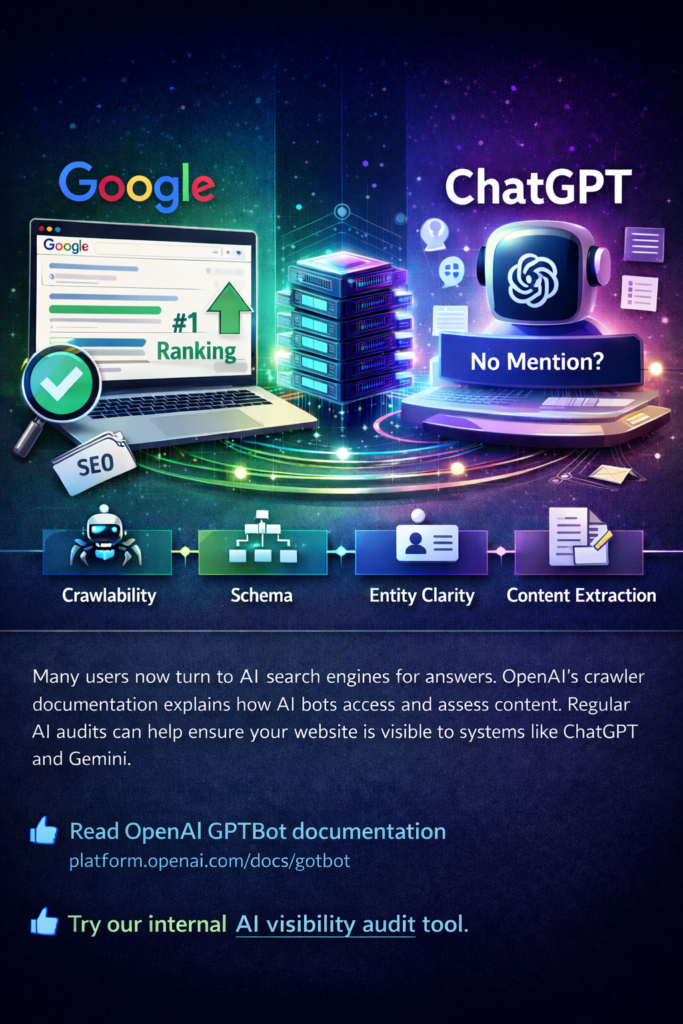
AI search is rapidly changing how users discover websites and products. While your site may rank well on traditional search engines, it may still remain invisible to AI assistants if it isn’t optimized for AI visibility signals like crawlability, structured data, and clear entity definitions. To better understand how AI crawlers access and evaluate web content, you can review the official OpenAI crawler documentation (https://platform.openai.com/docs/gptbot). You can also test your website’s readiness for AI search by running an AI visibility audit here: https://www.llmaudit.ai
The Future of Online Discovery
AI assistants are becoming the first step in the buyer journey.
Brands that remain invisible to LLMs will lose:
awareness
consideration
revenue
to competitors that understand AI search optimization.
The solution isn’t gaming the system.
It’s making your website clear, structured, trustworthy, and machine-readable.
And that begins with identifying the gaps.
Run your free audit at LLMAudit.ai and discover your AI visibility score today.
AI Visibility FAQs
Common Questions About AI SEO and GEO
Traditional SEO rankings depend on keywords, backlinks, and page authority. AI assistants such as ChatGPT or Perplexity evaluate different signals including structured data, entity clarity, and content extractability. If a website lacks these signals, it may rank on Google but still not be cited in AI-generated answers.
AI visibility describes how frequently a website or brand is referenced by AI assistants like ChatGPT, Gemini, Claude, or Perplexity when answering user questions. Websites optimized for AI readability and structured data are more likely to appear in these responses.
Generative Engine Optimization focuses on making content understandable for AI systems. GEO includes improving structured data, ensuring AI crawler accessibility, defining clear entities, and structuring content so language models can easily extract reliable answers.
Important AI crawlers include GPTBot (OpenAI), ClaudeBot (Anthropic), and PerplexityBot. Allowing these bots in robots.txt ensures that AI platforms can access and evaluate your website’s content.
Schema markup provides structured information that helps search engines and AI systems understand the meaning of content. Implementing schema types such as Organization, Article, and FAQPage improves classification and increases the chances of AI citation.
You can analyze AI visibility by checking crawler access, schema implementation, entity clarity, and content structure. AI SEO tools such as LLMAudit.ai can scan websites and identify technical gaps affecting AI citations.