 LLM Audit
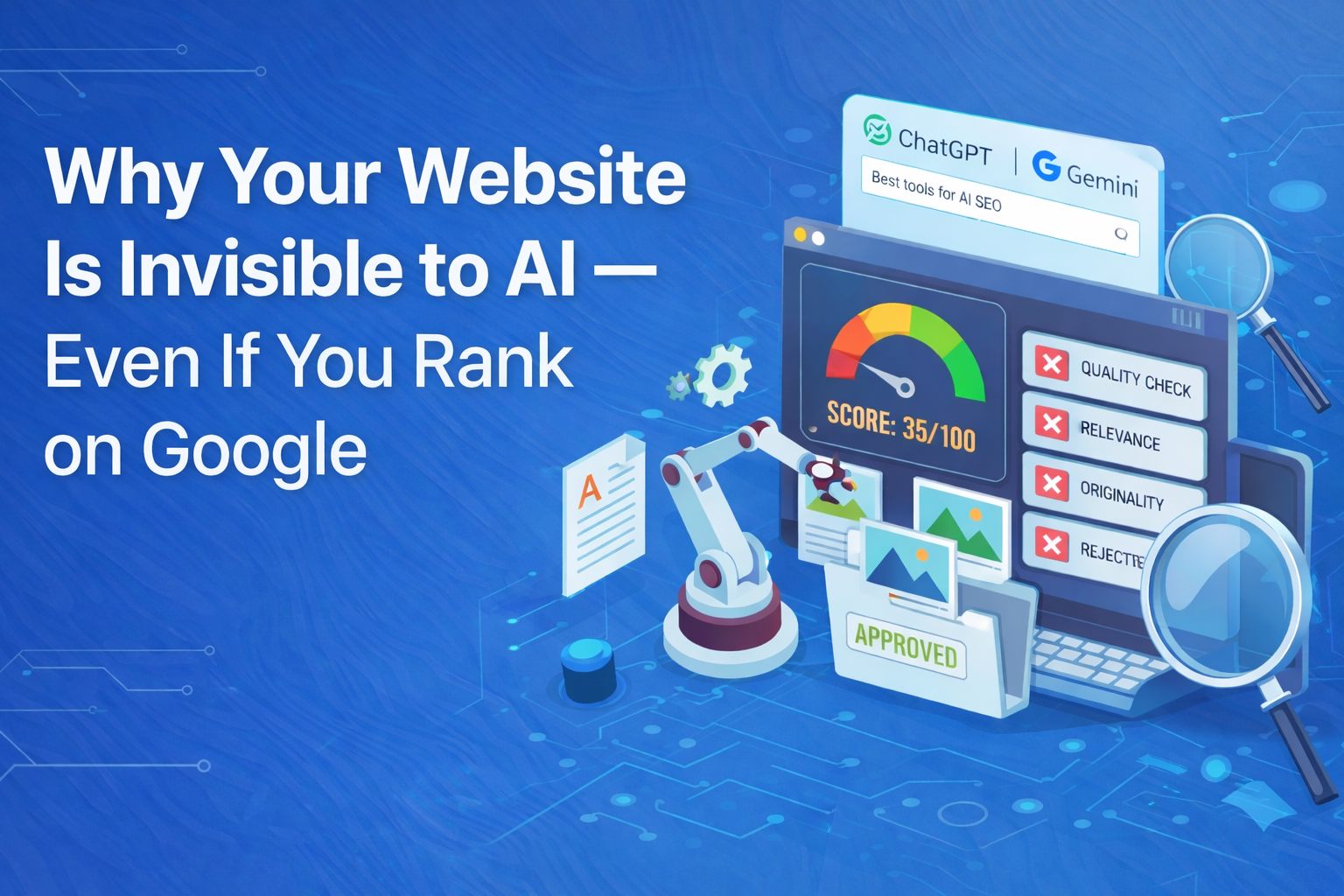
You’ve optimized your website.
You load fast.
You’ve built backlinks.
You rank on page one of Google.
Yet when someone asks ChatGPT, Gemini, or Perplexity about your product category, your brand doesn’t appear.
This is not a coincidence. It’s a structural visibility gap — and it’s affecting thousands of high-ranking websites in 2026.
Traditional SEO gets you discovered in search results.
LLM optimization gets you cited in AI answers.
These are not the same thing.
Traditional SEO vs LLM Visibility
AI systems do not behave like traditional search engines. They do not simply display ranked URLs. They synthesize answers.
Here’s how the two systems differ:
| Factor | Traditional SEO (Google) | LLM-Based AI (ChatGPT, Gemini, Perplexity) |
|---|---|---|
| Output | List of ranked links | Direct synthesized answer |
| Primary Goal | Surface pages | Construct trusted responses |
| Crawl Behavior | Renders JavaScript | Often cannot render JS |
| Ranking Signals | Backlinks, authority, UX | Structured clarity, entity trust, schema |
| User Action | Clicks link | Often no click at all |
If your brand is not structurally understandable to AI systems, you will not be included in the answer — even if you rank #1 on Google.
The Core Problem: Being Found vs Being Understood
Search engines index pages.
Large Language Models interpret meaning.
When a user asks:
“What’s the best tool for auditing website AI visibility?”
An LLM doesn’t return URLs.
It generates a response based on its internal understanding of entities and trusted sources.
The question is not:
“Can AI find your page?”
The question is:
“Does AI understand your brand clearly enough to cite it?”
Most websites fail here — not because of poor content, but because their content is structured for humans, not machines.
What AI Crawlers Actually See
Modern websites are built with JavaScript frameworks like React, Vue, and Next.js.
These frameworks dynamically load content.
The problem:
Many AI crawlers do not render JavaScript.
That means when they visit your site, they may see:
- An empty HTML shell
- Script tags
- Minimal structured content
They do not see:
- Your product descriptions
- Your FAQs
- Your detailed service breakdown
- Your value proposition
If critical content only appears after JavaScript executes, it effectively does not exist for many AI systems.
Visual Representation of the Issue
User View (Browser Rendered):
- Full content
- Images
- Structured layout
- FAQs
AI Bot View (Raw HTML Response):
- Minimal text
- Script references
- Missing structured meaning
An LLM readiness audit must analyze the server-rendered HTML, not the browser-rendered version.
The Three Core Signals AI Uses to Trust Your Website
AI systems evaluate content differently than traditional search engines.
These are the three signals that determine whether your site is cited or ignored.
1. Structured Clarity
LLMs are advanced reading comprehension systems.
They perform best when content has:
- Logical heading hierarchy (H1 → H2 → H3)
- Clear, direct statements
- Descriptive anchor text
- Declarative opening paragraphs
Content that slowly builds context through storytelling may work for humans — but can confuse AI extraction systems.
Your most important pages should answer:
What is this? Who is it for? What category does it belong to?
Within the first two sentences.
2. Schema Markup
Schema is structured data embedded in HTML that tells machines what something is.
Common critical schema types:
- Organization
- LocalBusiness
- Product
- FAQPage
- HowTo
Without schema, AI must infer facts from prose.
Inference increases the risk of:
- Incorrect descriptions
- Hallucinated details
- Omission from answers
Schema increases entity confidence.
3. Contextual Completeness
AI builds entity associations.
If your site never clearly states:
- Your product category
- Your industry
- Who you serve
- How you compare to alternatives
The model cannot build a strong association map.
Think of it like this:
If someone described you without mentioning your job title, your listener would have an incomplete understanding.
That is how many websites present themselves to AI systems.
The LLM Visibility Score Framework
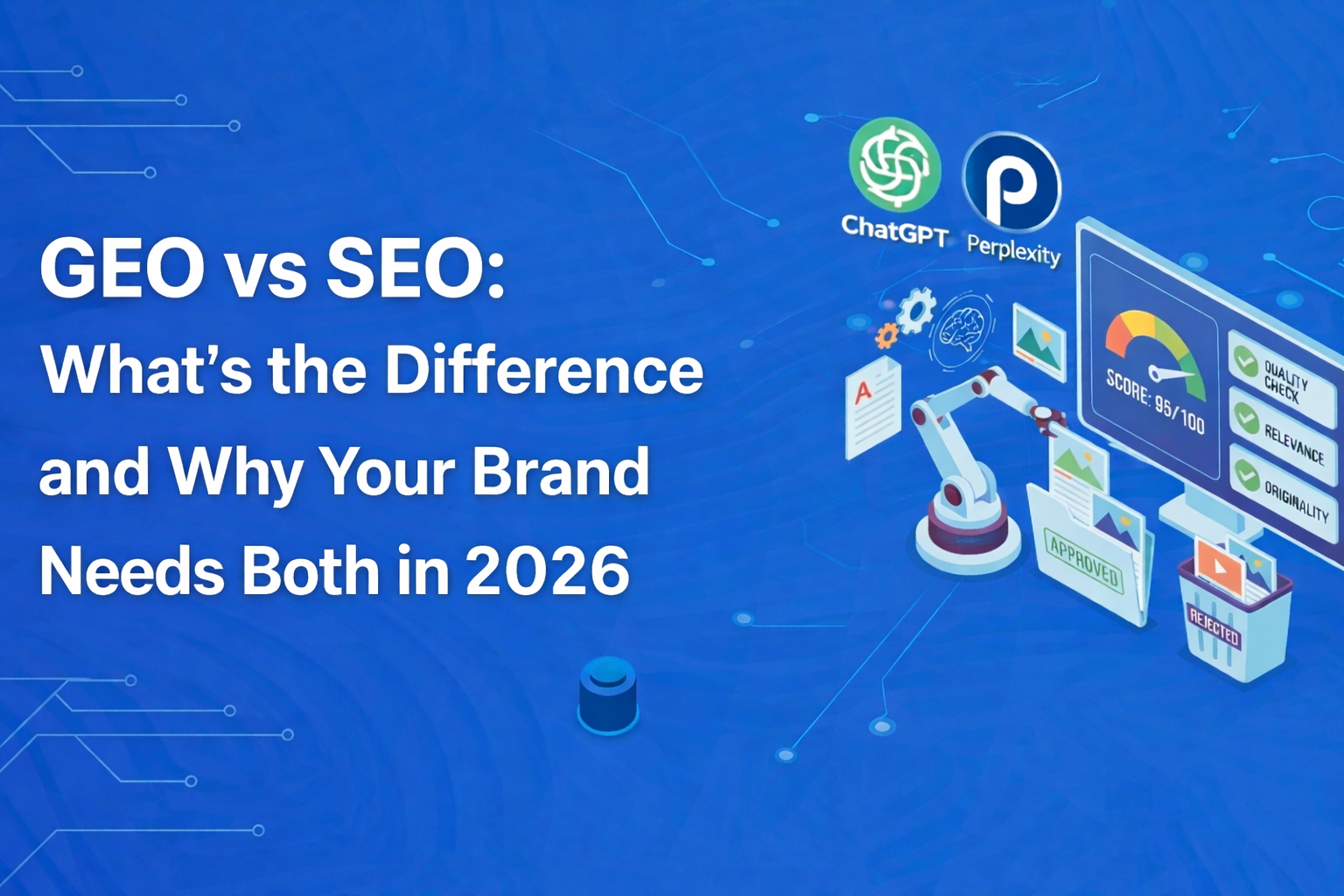
A useful way to think about AI visibility is on a 0–100 spectrum.
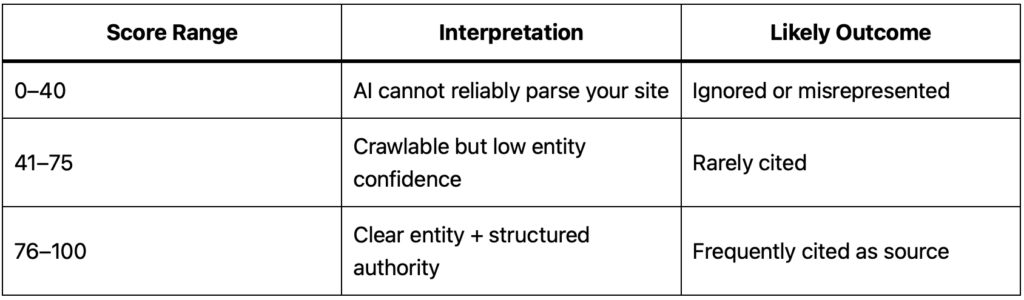
Most websites that have not run an LLM readiness audit score between 40 and 60.
They are technically accessible — but not trustworthy enough for citation.
Five High-Impact Fixes You Can Implement Immediately
You do not need a full website rebuild to improve LLM visibility.
These changes produce measurable improvements.
1. Move Critical Content Out of JavaScript
Ensure your:
- Business name
- Core description
- Primary services
- Value proposition
Exist in server-rendered HTML.
If using React or Next.js:
- Enable server-side rendering (SSR)
- Use static site generation (SSG) for key pages
2. Implement and Validate Schema Markup
Minimum recommended:
- Organization schema (homepage)
- FAQPage schema (FAQ pages)
Validation tools can test structure, but remember: you are optimizing for machine comprehension — not just rich snippets.
3. Write Direct, Declarative Opening Paragraphs
Example structure:
“[Brand Name] is a [category] platform that helps [audience] achieve [primary outcome].”
Clarity first. Storytelling second.
4. Expand Public FAQ Content
FAQs are highly effective for LLM visibility because:
- They mirror conversational queries
- They are structured as Q&A
- They provide direct answers
Ensure FAQ and knowledge base content is publicly crawlable.
5. Audit Robots.txt and Meta Robots Tags
Many websites unintentionally block:
- GPTBot
- ClaudeBot
- PerplexityBot
Check that:
- Important pages are not disallowed
- You have not globally opted out of AI crawlers unintentionally
Why LLM Optimization Matters More Every Month
AI-powered interfaces are now part of the research journey.
Users often:
- Ask an AI system for recommendations
- Only then search traditionally for validation
If your competitor is cited in the AI response and you are not, the trust advantage compounds.
AI citation is the new first impression.
The Competitive Window Is Still Open
LLM optimization is early.
Most businesses:
- Have not audited their AI visibility
- Have not structured content for machine comprehension
- Have not implemented entity-level schema
Websites that act now gain a structural advantage that compounds over time.
Conclusion: Visibility Is No Longer Just About Rankings
Ranking on Google does not guarantee inclusion in AI-generated answers.
To compete in 2026, you must optimize for:
- Crawlability
- Structured clarity
- Schema completeness
- Entity confidence
- Contextual authority
An LLM readiness audit identifies where your site stands and what structural gaps prevent AI citation.
Run a Free LLM Readiness Audit
If you want to know whether AI systems can:
- Parse your content
- Understand your entity
- Trust your authority
- Cite your brand
Run a free LLM readiness audit at:
No signup required.
Understanding your score is the first step toward fixing it.
AI Visibility & LLM Readiness – FAQ
Common questions about optimizing your website for AI-powered search engines and Large Language Models.
Traditional SEO ranks pages in search engines. AI systems generate direct answers based on structured clarity, schema markup, and entity trust. Without machine-friendly structure, your brand may not be cited.
No. Many AI crawlers cannot fully render JavaScript. If your content loads dynamically, it may be invisible unless server-rendered.
LLM readiness measures how well your website is structured for AI systems to parse, understand, and trust your brand.
Structured headings, schema markup, and contextual completeness help AI systems build strong entity associations and citation confidence.
Enable server-side rendering, add Organization and FAQ schema, write clear opening paragraphs, expand FAQs, and audit robots.txt for AI crawler access.
A score above 76 indicates strong AI trust and citation likelihood. Most unoptimized sites score between 40 and 60.