Introduction:
This article analyzes the latest research on AI Overview citations, including why only 38% of cited pages rank in the top 10 results and how Google’s query fan-out system selects sources. The findings are based on industry research and data studies such as the Ahrefs AI Overview citation analysis and insights from Google’s AI search documentation.
If you’re looking to understand how your brand appears in AI answers, you can also explore our related resources on AI search visibility, LLM optimization strategies, and how to run a complete AI visibility audit for your website.
The Research Behind the Numbers
The dataset used in the study included:
| Metric | Value |
|---|---|
| Keywords analyzed | 863,000 |
| AI Overview citations | 4,000,000 |
| AI model powering AIO | Gemini 3 |
| Data source | AI visibility tracking tools |
The goal of the research was simple:
How often do Google search results appear as sources in AI Overviews?
Only 38% of AI Citations Come From Top 10 Results
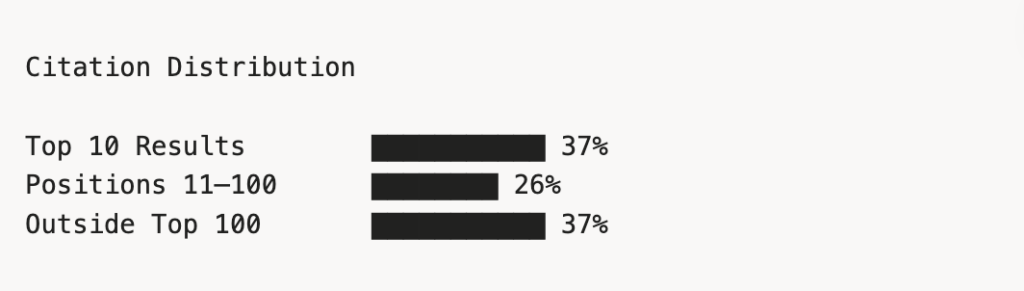
The study found the following distribution:
| Organic Ranking Position | Percentage of AI Citations |
|---|---|
| Top 10 results | 37.1% |
| Positions 11–100 | 26.2% |
| Outside top 100 | 36.7% |
Visualization of AI Overview Citation Sources
The takeaway is clear:
More than 60% of AI citations come from pages that are not ranking in the top 10 search results.
This challenges one of the core assumptions of traditional SEO.
Why AI Overviews Don’t Rely Only on Top Results
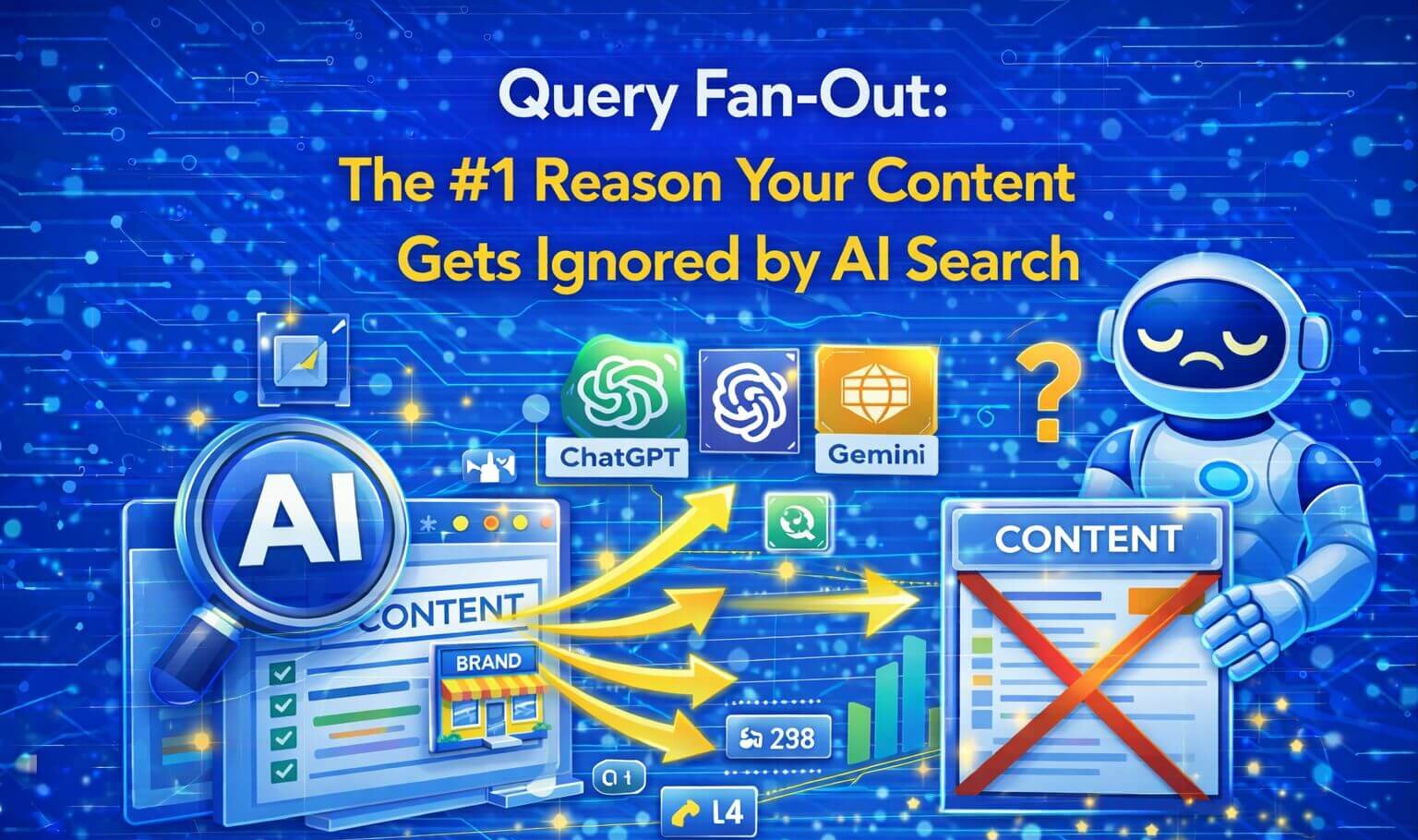
The main reason behind this shift is a technique called Query Fan-Out.
Instead of answering a query directly using the current search results, Google’s AI system expands the query into multiple related questions.
Example:
User query:
“Best AI SEO tools”
Possible fan-out queries:
- What tools track AI citations?
- Which SEO tools support AI search optimization?
- How to measure brand visibility in AI answers?
- What tools monitor ChatGPT mentions?
Google then gathers sources from all these related queries, not just the original search result page.
AI Query Fan-Out Process
User Query
    │
    ▼
Query Expansion
    │
    ├─ Related question 1
    ├─ Related question 2
    ├─ Related question 3
    │
    ▼
Multiple SERPs analyzed
    │
    ▼
Sources selected for AI Overview
This means a page ranking #40 could still get cited if it answers a fan-out query well.
AI Overviews Are Becoming More Independent from Google Rankings
Earlier studies from 2025 suggested that over 75% of AI citations came from pages ranking in the SERP.
Today, that number has dropped dramatically.
AI Citation Source Trend
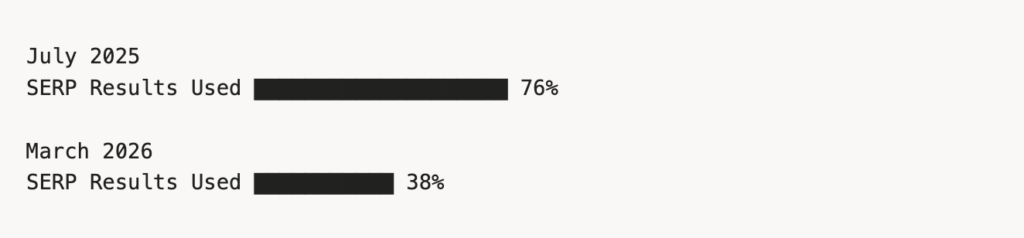
This indicates that AI Overviews are becoming less dependent on traditional rankings and more dependent on semantic relevance.
YouTube Is Becoming a Major AI Citation Source
Another surprising finding from the research was the role of YouTube.
Among the AI citations that did not rank in the top 100 search results, 18.2% were YouTube videos.
AI Citation Sources Outside Top 100
| Source Type | Share |
|---|---|
| YouTube | 18.2% |
| Blogs | 52% |
| Forums & communities | 16% |
| Documentation sites | 13% |
Across the full dataset:
YouTube accounted for about 5.6% of all AI Overview citations.
This makes YouTube one of the most influential content platforms in AI search visibility.
Why YouTube Works Well for AI Citations
AI systems rely on several elements in YouTube videos:
- Video titles
- Descriptions
- Transcripts
- Mentions within the video
- Links in the description
These signals provide structured context that AI systems can easily extract.
Brands that actively publish on YouTube often gain higher AI visibility across:
- AI Overviews
- ChatGPT
- Perplexity
- Gemini
The New SEO Strategy: Optimize for Fan-Out Queries
Traditional SEO focuses on optimizing for individual keywords.
But AI search works differently.
Instead of ranking for one keyword, your content must cover an entire topic ecosystem.
Old SEO vs AI SEO
| Traditional SEO | AI Search Optimization |
|---|---|
| Optimize for keywords | Optimize for topics |
| Focus on rankings | Focus on citations |
| Single query | Query clusters |
| Content depth optional | Content coverage critical |
This means your content must answer multiple related questions around a topic.
How to Increase Your Chances of Being Cited by AI
Based on the research and emerging AI search patterns, several strategies consistently increase citation probability.
1. Cover Topics from Multiple Angles
Instead of writing a single article targeting one keyword, structure content to answer related questions.
Example structure:
What is AI SEO?
How AI search engines work
How AI citations are selected
Tools for tracking AI visibility
Best practices for AI optimization
This mirrors the query fan-out process used by AI systems.
2. Use Structured Content
AI systems prefer content that is easy to extract.
Best formats include:
- tables
- lists
- step-by-step frameworks
- definitions
- statistics
Example:
| Format | Why AI Uses It |
|---|---|
| Definitions | Easy to quote |
| Tables | Easy to summarize |
| Lists | Structured extraction |
| Data statistics | High authority |
3. Publish Across Multiple Platforms
AI models do not rely only on websites.
They pull information from:
- blogs
- documentation
- YouTube
- news articles
The more places your brand appears, the stronger your entity recognition becomes.
4. Monitor AI Citations
The most effective strategy is tracking when and where AI systems reference your brand.
By analyzing AI responses, you can identify:
- which pages get cited
- which competitors appear
- which queries trigger mentions
This allows businesses to move from guessing to measuring AI visibility.
Why AI Visibility Tracking Is Becoming Essential
With the growth of AI search, companies need new analytics tools.
Traditional SEO tools track:
- rankings
- backlinks
- organic traffic
But they cannot track:
- AI citations
- LLM mentions
- brand visibility in AI answers
This is why AI visibility analytics platforms are emerging.
These tools analyze:
- prompts across AI models
- brand mentions
- competitor citations
- query patterns
Final Thoughts
AI Overviews are changing how search works.
The latest research shows:
- Only 38% of AI citations come from top 10 results
- Many citations come from lower ranked pages
- YouTube is rapidly becoming a major source
- AI systems rely heavily on query fan-out expansion
For businesses, this means success in AI search requires a new approach.
Instead of optimizing for one keyword, you must optimize for an entire knowledge ecosystem.
And instead of focusing only on rankings, you must focus on being selected as a source.
Because in AI search, the brands that win are not necessarily the ones that rank first.
They are the ones AI systems trust enough to cite.
Frequently Asked Questions
No. Research shows that only about 38% of pages cited in AI Overviews rank in the top 10 search results. Many cited pages appear between positions 11–100 or even outside the top 100.
Google uses a technique called query fan-out. The AI expands a search query into multiple related sub-queries and gathers sources from several related search results.
Query fan-out is when an AI system expands a search query into multiple related questions and pulls information from pages ranking for those related searches.
YouTube provides structured signals such as video titles, descriptions, transcripts, and spoken mentions that AI systems can easily analyze.
Websites should create comprehensive content, cover topics from multiple angles, use structured formats like tables and lists, and build strong entity clarity.
Yes. Traditional SEO still signals authority and credibility. However, AI systems also evaluate topic coverage, semantic relevance, and contextual expertise.