If you’re still tracking ten blue links in 2026, you’re only seeing half the picture.
Search has fundamentally evolved. Your audience is asking ChatGPT for product recommendations, using Perplexity for deep research, and getting instant answers from Google’s AI Overviews instead of clicking search results.
This shift has created anxiety across the SEO community. It feels like AI is stealing traffic. In reality, search hasn’t disappeared — it has evolved.
We are now operating in the era of Answer Engine Optimization (AEO).
To win in 2026, brands must understand how Large Language Models (LLMs) perceive, cite, and recommend them.
This guide explains the modern AI SEO tech stack and the tools required to track your LLM visibility.
Why Traditional SEO Tools Aren’t Enough Anymore
Traditional rank trackers show where a URL ranks for a keyword.
LLM visibility works differently.
Modern AI search engines rely on Retrieval-Augmented Generation (RAG), meaning they retrieve real-time information from the web to generate answers and cite sources.
Tracking AI visibility requires measuring signals beyond rankings.
Key Metrics for LLM Visibility
Brand Mentions
Does AI recommend your brand in response to commercial queries?
Citation Frequency
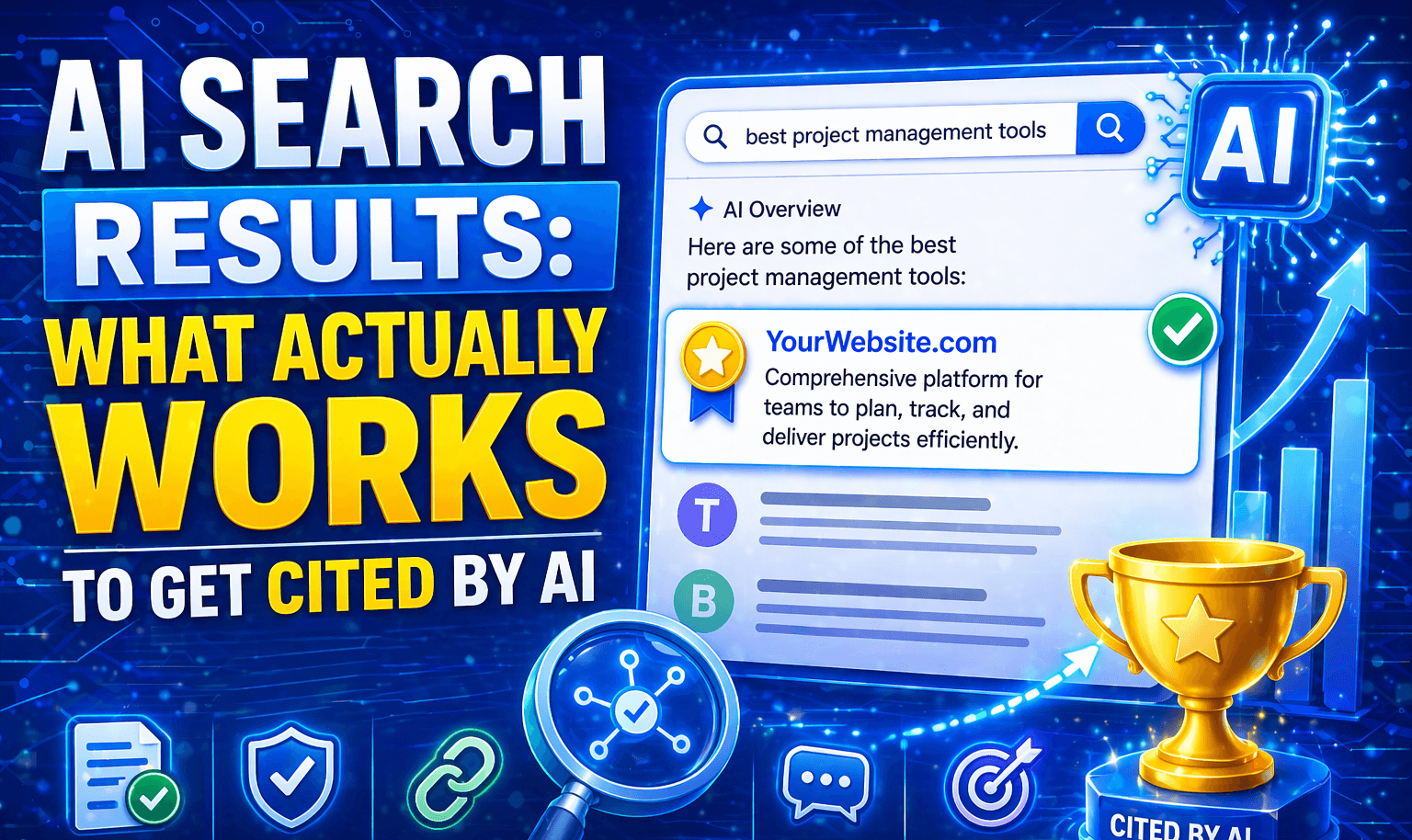
Is your website cited as a source in Perplexity or AI Overviews?
Share of Voice (SOV)
How often do you appear compared to competitors?
Sentiment & Accuracy
Is AI describing your product accurately, or hallucinating details?
How AI Search Diffuses Visibility
Traditional Search → Rankings → Click → Website

AI Search → Retrieval → Synthesis → Answer → Citation
AI answers compress discovery into a single step. Visibility now depends on trust and citation eligibility rather than ranking alone.
Core Components of the 2026 AI SEO Tech Stack
A modern stack must bridge traditional SEO and AI answer engines.
Pillars of AI SEO Infrastructure
Hybrid SEO Suites
Combine keyword tracking with AI visibility.
Dedicated LLM Trackers
Simulate prompts and measure Share of Voice across models.
Brand Perception & Sentiment Tools
Analyze how AI describes your brand.
Visualizing the AI Retrieval & Citation Flow
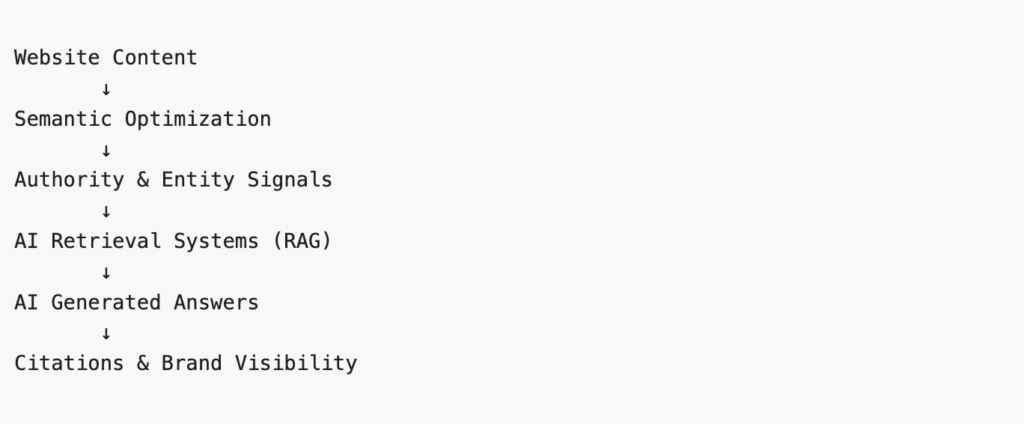
Content optimized for clarity, authority, and semantic completeness improves retrieval probability.
Top Tools to Track LLM Visibility in 2026
The AI SEO market has matured rapidly. Below are the top tools categorized by use case.
1. Hybrid SEO Platforms (All-in-One Visibility)
These tools integrate traditional SEO with AI tracking.
Semrush (AI Visibility Toolkit)
Tracks visibility across ChatGPT, Google AI Overviews, Gemini, and Perplexity while linking AI citations with backlink and ranking data.
Best for: unified SEO + AI tracking
Ahrefs (Brand Radar)
Correlates backlink authority with AI citations and tracks when LLMs mention your brand versus linking to your content.
Best for: understanding citation authority impact
SE Ranking (AI Search Toolkit)
Tracks brand mentions in Perplexity and AI Overviews with competitor comparisons and historical trends.
Best for: actionable visibility insights
2. Dedicated LLM Visibility Trackers
Built specifically to monitor AI answer engines.
Profound
Enterprise-grade platform that discovers high-intent prompts and tracks Share of Voice across major LLMs.
Best for: large-scale competitive benchmarking
Nightwatch
Tracks the full RAG pipeline, including the web searches AI models perform before generating answers.
Best for: understanding AI retrieval behavior
ZipTie
Provides deep analytics for Google AI Overviews and how brands appear in AI-generated search summaries.
Best for: Google ecosystem dominance
3. Mid-Market & Agency-Friendly Tools
Cost-effective options for agencies and growing brands.
Otterly.AI
Tracks citations across ChatGPT, Gemini, Claude, and Perplexity with a client-friendly dashboard.
Best for: agencies & budget-conscious teams
Peec AI
Focuses on brand perception and comparative descriptions used by AI.
Best for: understanding brand positioning
LLMClicks.ai
Detects AI hallucinations and flags incorrect product descriptions or pricing.
Best for: B2B SaaS accuracy monitoring
4. AI Visibility & Citation Intelligence
LLMAudit.ai
LLM Audit provides specialized visibility analysis designed to help brands understand how AI systems perceive and cite them.
It enables teams to:
- Measure Share of Voice in AI-generated answers
- Detect misinformation or hallucinated details
- Monitor brand sentiment and contextual associations
- Benchmark visibility against competitors
By combining prompt testing with AI output analysis, LLM Audit helps organizations ensure their content is accurately represented and citation-ready.
Best for: AI citation visibility, brand recall analysis, and LLM perception monitoring.
AI Visibility Tool Comparison
| Tool | Category | Core Strength | Best For |
|---|---|---|---|
| Semrush | Hybrid Suite | Unified AI + SEO tracking | Enterprises |
| Ahrefs | Hybrid Suite | Authority & citation correlation | Authority tracking |
| SE Ranking | Hybrid Suite | Competitor AI visibility | Mid-market |
| Profound | LLM Tracker | Share of Voice across LLMs | Enterprise |
| Nightwatch | LLM Tracker | RAG pipeline tracking | Technical teams |
| ZipTie | LLM Tracker | Google AI Overviews | eCommerce & search |
| Otterly.AI | Mid-market | Multi-platform tracking | Agencies |
| Peec AI | Mid-market | Brand perception insights | Brand teams |
| LLMClicks.ai | Specialist | Hallucination detection | SaaS companies |
| LLM Audit | AI Visibility Intelligence | Citation & perception analysis | AI citation tracking |
How to Build Your 2026 AI SEO Stack
You do not need every tool.
Step 1: Identify where your audience searches
- B2B SaaS → ChatGPT & Perplexity
- eCommerce → Google AI Overviews
- Research-heavy industries → Gemini & AI search
Step 2: Upgrade your core SEO suite
Start with Semrush or Ahrefs AI modules.
Step 3: Add AI citation tracking
Use tools like LLM Audit or Otterly.AI to monitor citation frequency and Share of Voice.
Step 4: Monitor sentiment & accuracy
Ensure AI responses describe your brand correctly.
AI Visibility vs Traditional Rankings
HIGH TRAFFIC ≠ HIGH AI VISIBILITY
HIGH TRUST SIGNALS = HIGH AI CITATION PROBABILITY
Trust, authority, and semantic clarity now outweigh ranking position alone.
Common Mistakes When Tracking AI Visibility
- Focusing only on keyword rankings
- Ignoring entity recognition signals
- Weak content structure
- Lack of topical depth
- Not testing AI responses regularly
Correcting these gaps improves citation eligibility.
The Future of AI Search Optimization
Search is shifting from ranking pages to recommending trusted answers.
Success will depend on:
Entity authority
Semantic completeness
Structured clarity
Trust signals
Citation eligibility
Brands that adopt AI visibility tracking early will gain long-term competitive advantage.
Final Insight
Search is not disappearing — it is becoming answer-driven.
Traditional SEO helps users find you.
AI SEO ensures answer engines recommend and cite you.
By upgrading your tech stack and incorporating AI visibility intelligence tools like LLM Audit, you ensure your brand stays visible no matter which AI your customers consult.
In 2026, the brands that win will not just rank — they will be the answers.