Search has always rewarded those who understood how discovery engines work.
In the early days, that meant mastering crawlability and keywords. Later, it meant earning backlinks and domain authority. In 2026, it means something different altogether — it means understanding how large language models decide what to cite, surface, and recommend.
That discipline has a name: LLM optimization.
If you’re an SEO professional who hasn’t yet built LLM optimization into your workflow, this guide covers everything you need to know — what it is, how it works, and how it differs from what you’re already doing.
What Is LLM Optimization?
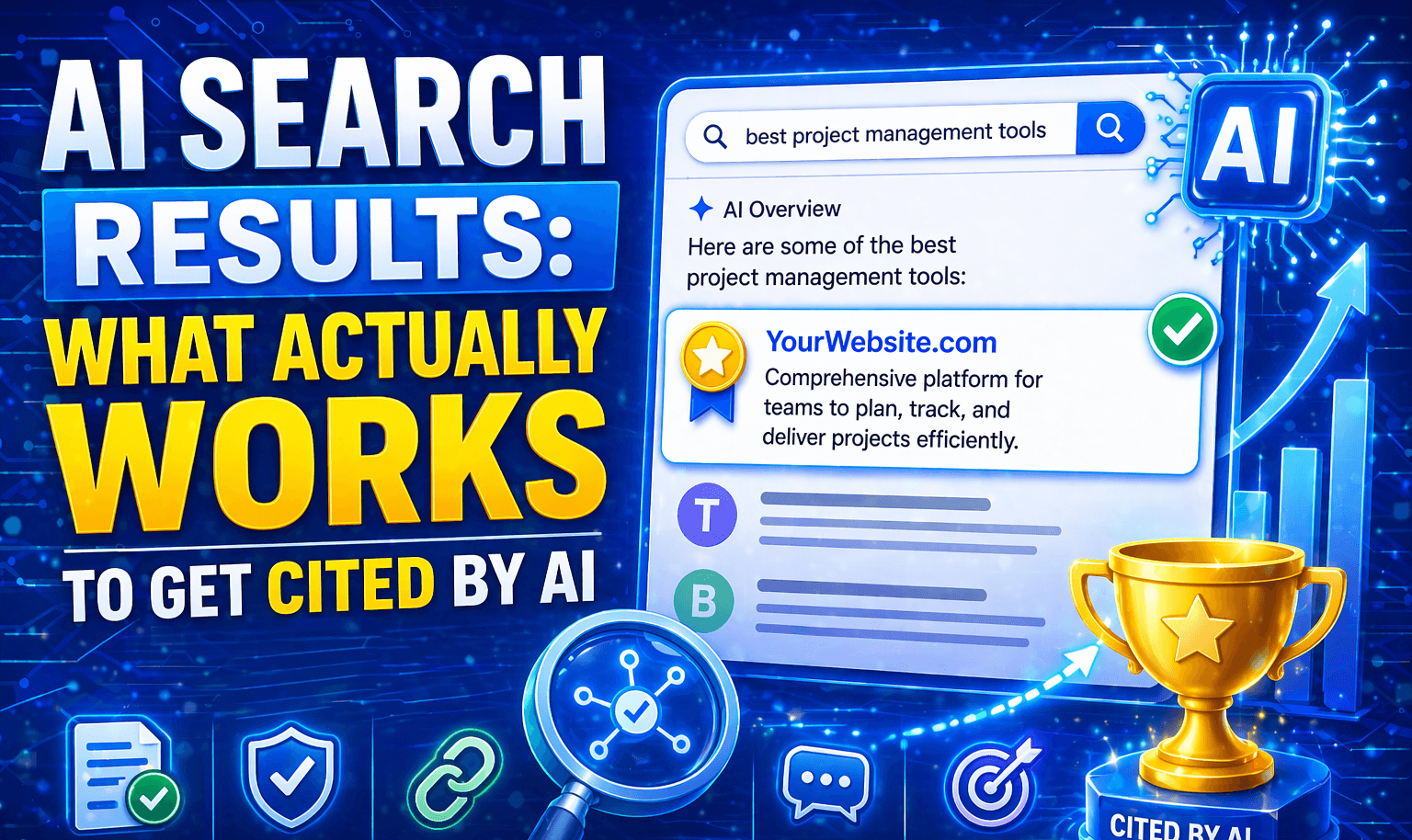
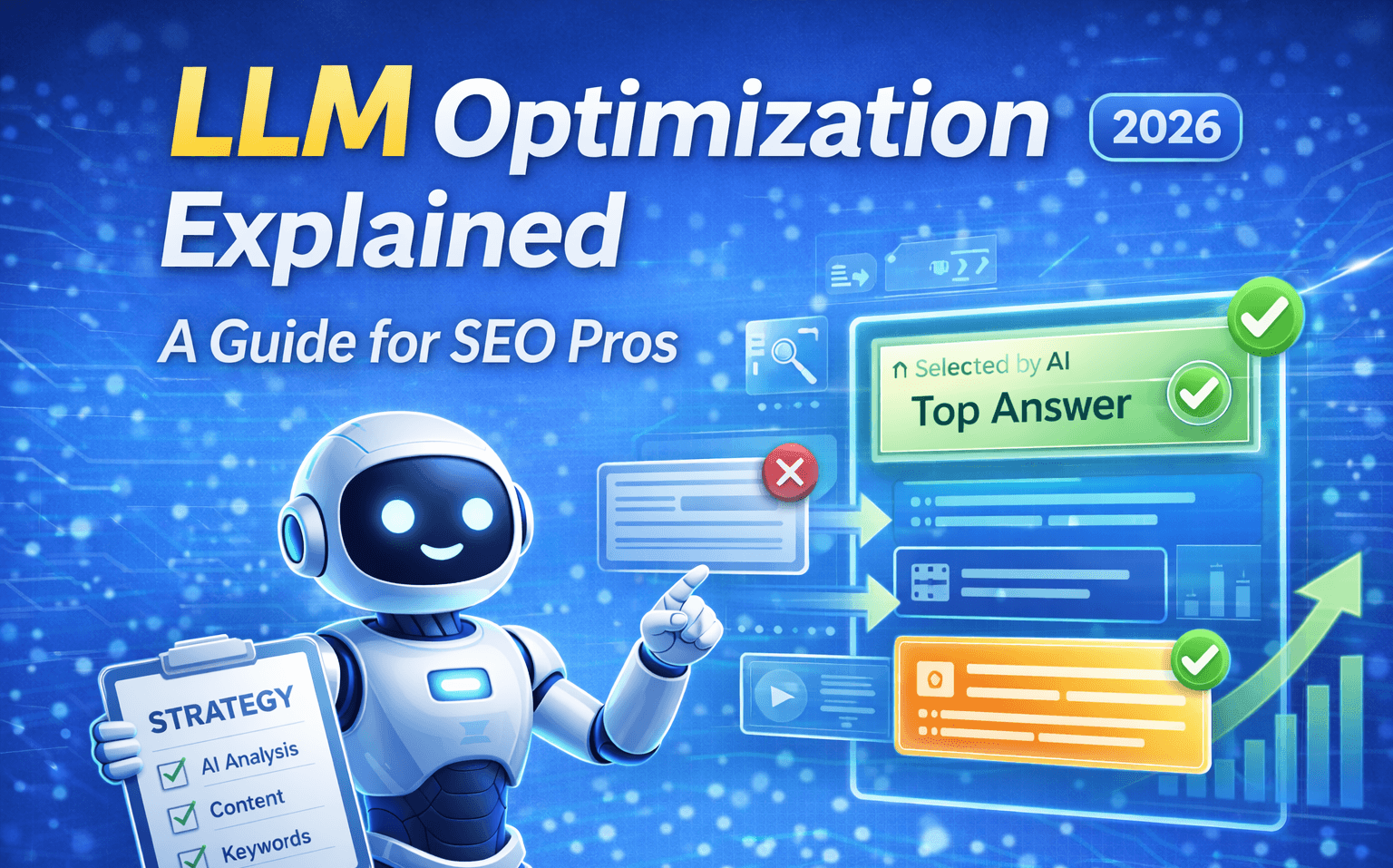
LLM optimization — sometimes called LLMO or Generative Engine Optimization (GEO) — is the discipline of structuring brand information so that AI models like ChatGPT, Gemini, Perplexity, Claude, and Copilot accurately surface, recommend, and contextualize your brand in their outputs.
Put simply, it is the practice of making your content easy for AI systems to find, understand, trust, and cite.
Traditional SEO optimizes for search engine crawlers and ranking algorithms. LLM optimization, however, targets a fundamentally different system — one that doesn’t return a list of links, but instead synthesizes information from multiple sources and generates a direct answer. To appear in that answer, your content needs to meet a different set of criteria entirely.
Why LLM Optimization Matters in 2026
The scale of LLM adoption makes this impossible to ignore.
ChatGPT processes 2.5 billion queries daily and has 900 million weekly active users worldwide. Meanwhile, according to Gartner, 67% of information discovery will occur through LLM interfaces by 2026, up from 23% in 2024.
Furthermore, the traffic that does arrive through AI is unusually valuable. AI search visitors convert 23 times better than traditional organic traffic, and AI-referred traffic carries 4.4 times higher economic value — because users arriving via AI recommendations have already been filtered for intent.
Therefore, LLM optimization isn’t simply a visibility exercise. It directly impacts lead quality and revenue.
How LLM Optimization Differs From Traditional SEO
Understanding the distinction is essential before building a strategy. The two disciplines overlap significantly, but they are not the same.
| Factor | Traditional SEO | LLM Optimization |
| Target system | Search engine crawlers | LLM retrieval pipelines |
| Success metric | Rankings & organic clicks | Citation frequency & brand mentions |
| Content focus | Keyword density | Factual density & structure |
| Authority signal | Backlinks | Data richness, third-party mentions |
| Formatting priority | Readability for humans | Extractability for AI |
| Speed of impact | Weeks to months | Days to weeks |
Crucially, the two are not in competition. Brands with the strongest share of voice in LLM responses are typically those that invested in SEO first. Strong technical health, structured data, and authority signals remain the bedrock for AI visibility. In other words, traditional SEO is still the foundation — LLM optimization is the layer you build on top of it.
The Core Principles of LLM Optimization
1. Structure Content for Extraction, Not Just Reading
LLMs don’t browse content the way humans do. Instead, they scan for extractable, structured information. Consequently, content with clear headings, short paragraphs, bullet points, comparison tables, and FAQ sections is significantly more likely to be cited. Every key page should have at least one structured section that directly answers a likely query.
2. Prioritise Factual Density Over Keyword Density
When it comes to securing AI mentions and citations, content depth and readability matter most, while traditional SEO metrics like traffic and backlinks have little impact. This is a direct inversion of traditional SEO thinking. Adding specific statistics, named entities, sourced data points, and concrete examples increases citation likelihood far more than repeating target phrases.
3. Lead With the Answer
AI retrieval systems evaluate opening content heavily. Therefore, every important page should open with a direct, clear response to the primary query — not a build-up. If your answer doesn’t appear in the first 200 words, many LLMs will simply skip your content.
4. Build Brand Presence Beyond Your Website
Branded web mentions have the strongest correlation with AI Overview appearances — much higher than backlinks. This means LLM optimization extends beyond your own content. Third-party coverage, industry publication mentions, expert attribution, and community presence all feed into how AI systems perceive your brand’s authority and trustworthiness.
5. Refresh Content Consistently
LLMs can incorporate new content within days rather than waiting months for Google’s crawl and ranking cycles. However, content that isn’t updated regularly loses citation priority over time. Building a refresh cadence into your workflow is therefore one of the highest-leverage habits in LLM optimization.
How to Measure LLM Optimization Performance
This is where most SEO teams currently have a significant gap. Traditional dashboards — rankings, organic CTR, sessions — don’t capture LLM performance at all.
The leading measurement method uses a polling-based model where a representative sample of 250–500 high-intent queries is run daily or weekly, tracking when your brand and competitors appear as citations or mentions — enabling share of voice calculations across all AI platforms. The key metrics to track are:
- Citation frequency — how often your brand is cited in AI-generated answers
- Share of Model (SoM) — your citation rate compared to competitors
- AI-referred traffic — sessions arriving from ChatGPT, Perplexity, and similar tools
- Branded search lift — increases in direct brand searches driven by AI exposure
This is precisely what LLM Audit is built for. Rather than relying on traditional rank tracking, it monitors how your content performs inside AI-generated responses across ChatGPT, Perplexity, Gemini, and Claude — surfacing which pages get cited, which competitors are being selected instead, and where your content strategy needs to improve. For SEO professionals adding LLM optimization to their service offering, that level of measurement infrastructure is essential.
What to Action First
If you’re new to LLM optimization, start with these five steps:
- Audit your top 20 pages for structure, factual density, and direct-answer openings
- Rewrite H2 headers as questions that mirror actual user queries
- Add 2–3 specific statistics or data points to every key section
- Create or expand FAQ sections on your most important pages
- Set up tracking for AI-referred traffic in GA4 and begin monitoring citation frequency
These changes are low-effort relative to their impact. Furthermore, because LLMs update their citation pools faster than Google indexes new content, results can appear within days of implementation.
The Bottom Line
LLM optimization is not a replacement for the SEO fundamentals you already know. It is the next discipline that builds on top of them.
A 2024 study from Princeton, Georgia Tech, and The Allen Institute found that GEO-optimised content saw up to a 40% increase in visibility within AI-generated responses compared to traditionally optimised content — and that gap is widening, not shrinking.
The SEO professionals who understand this shift now will be the ones their clients and employers rely on for the next decade.
Don’t just rank. Get cited.
FAQs
LLM optimization is the practice of structuring and writing content so that large language models like ChatGPT, Perplexity, and Google Gemini cite it when generating answers. It focuses on making content easy for AI systems to find, extract, and trust — rather than just optimising for search engine rankings.
Content that performs best includes direct-answer openings, question-based headers, specific statistics and data points, structured formats like tables and FAQs, and regularly refreshed information. Keyword-dense but vague content performs poorly in LLM retrieval systems.
Track citation frequency (how often your brand appears in AI answers), Share of Model (your citation rate vs. competitors), AI-referred traffic in GA4, and branded search volume trends. Tools like LLM Audit are built specifically to monitor these signals across major AI platforms.
Updated content can enter AI citation pools within days — significantly faster than traditional SEO. However, meaningful and consistent citation growth typically builds over 4–8 weeks of sustained optimisation. The advantage compounds over time as citation authority accumulates.
No. Traditional SEO — technical health, authority building, quality content — remains the prerequisite for LLM visibility. Most AI systems still rely on high-ranking pages as a signal of credibility. LLM optimization is the additional layer that determines whether that ranked content actually gets cited inside AI-generated answers.