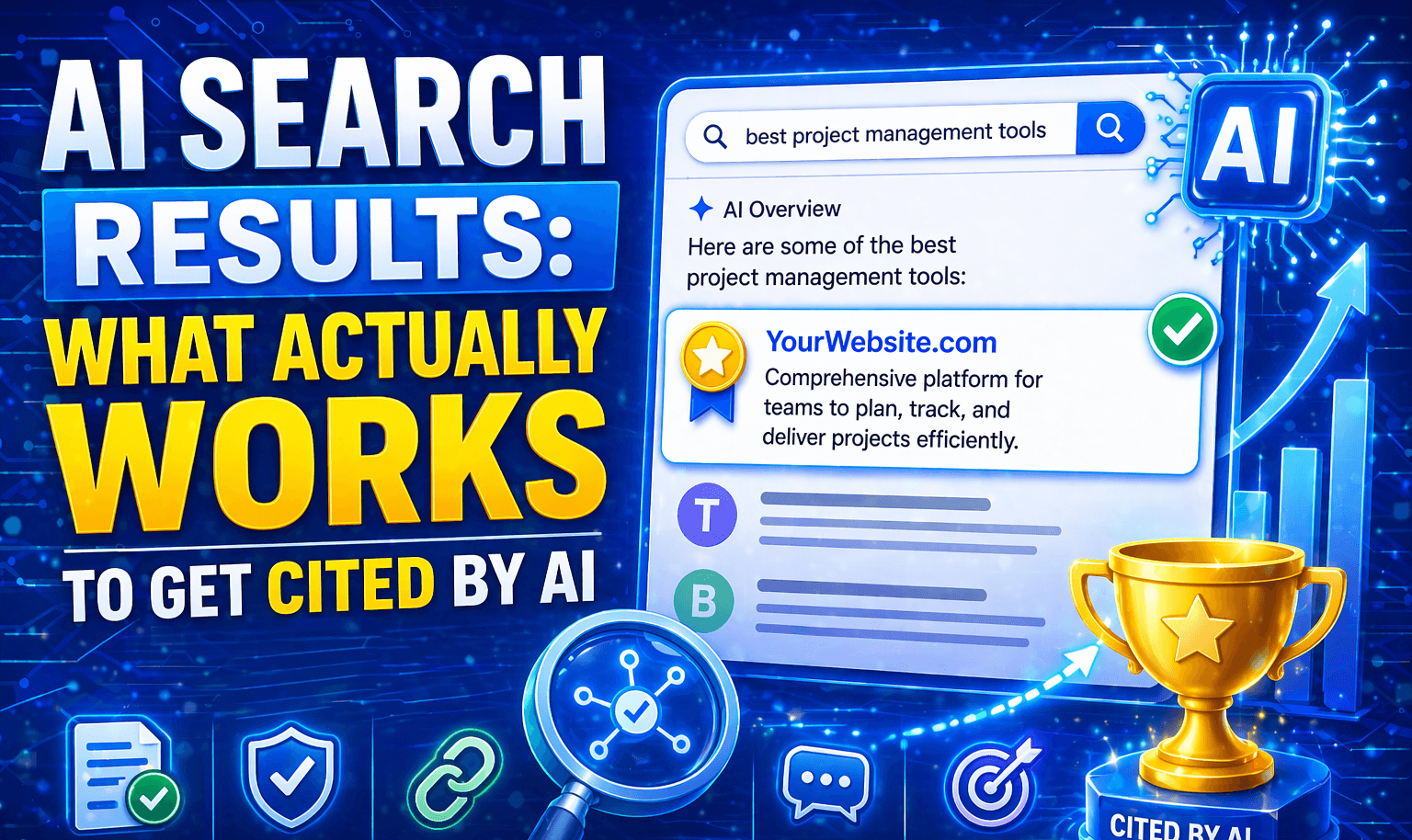
AI search results are changing how people discover information. Today, users often trust direct answers instead of clicking multiple links. As a result, brands now compete to be included in those answers. Because it gives them not just visibility but also customers.
So what actually works?
What Are AI Search Results?
AI search results are answers generated by AI tools that pull information from trusted sources instead of listing websites. These answers summarize key insights and often include recommendations.
Tools like ChatGPT, Google Gemini and other AI tools use this approach.
Why Most Content Does Not Get Cited
Many brands still write content for rankings. But that’s the wrong approach.
However, AI systems do not work like traditional search engines. Instead, they look for clarity, structure, and trust.
Because of this shift, most content fails to appear in AI search results and hence loses visibility that it deserved.
What Actually Works in AI Search Results
To get cited, content must match how AI systems process information and AI systems work different than Google rankings.
Here are some tips that may help you get cited by AI
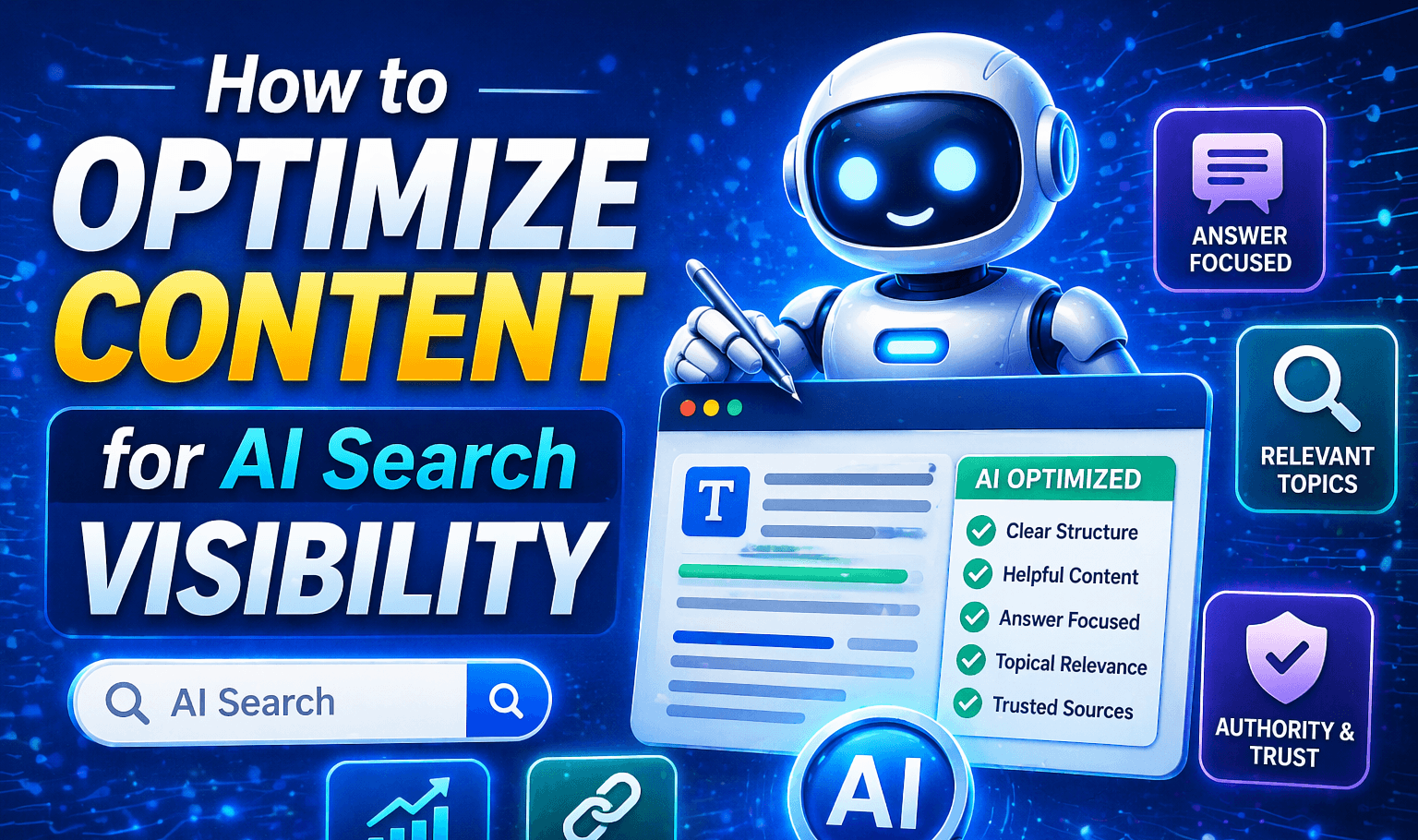
1. Answer Questions Immediately
First, answer the user’s query early.
Content that provides a direct answer in the first few lines is more likely to be used in AI search results because it improves clarity and reduces effort for the system. The early you are, the
2. Use Clear Structure
Next, organise your content well.
Use:
- headings (H2 and H3)
- short paragraphs
- bullet points
This helps AI extract information easily. Keeping things complex is not the way to win over AI
3. Build Topic Depth
In addition, create multiple blogs around the same topic. Over time, this builds authority and improves your chances of appearing in AI search results.
4. Strengthen Brand Presence
AI looks beyond your website. You need to be mentioned at different places.
So, increase your presence across:
- blogs
- reviews
- communities
- external platforms
These signals improve trust.
5. Keep Language Simple
Finally, write clearly and simply. Complex wording reduces readability and makes it harder for AI to process your content.
What Does Not Work
Many outdated tactics still exist.
For example:
- keyword stuffing
- generic writing
- copying competitors
- unclear structure
These reduce your chances of appearing in AI search results. So, it’s better to avoid them.
How to Improve Your Chances
To improve visibility, focus on consistency.
Start with:
- answer real questions
- structure content clearly
- build authority over time
- increase mentions across platforms
- stay consistent
These steps align with AEO and GEO strategies.
Why This Matters Now
User behaviour has changed.
Earlier, users explored multiple websites. Now, they rely on quick answers.
As a result, AI search results directly influence decisions. And hence, AI recommendations directly affect the business.
How LLMAudit Helps
Most brands do not know if they are getting cited.
LLMAudit helps solve this.
It allows you to:
- Track visibility in AI search results
- Identify competitors getting cited
- Find gaps in your strategy
- Measure improvement over time
Learn more here:
https://www.llmaudit.ai/blog/does-chatgpt-know-my-business-exists-heres-how-to-find-out/
Final Thought
AI search results reward clarity, structure, and trust.
Brands that focus on these signals get cited.
Others remain invisible.
FAQs
AI search results are generated answers that summarise information instead of listing links.
Content gets cited when it is clear, structured, and supported by strong authority signals.
AEO focuses on optimising content for answers instead of rankings.
GEO focuses on improving visibility in AI-generated responses.
Yes. Smaller brands can get cited if they create useful and well-structured content.