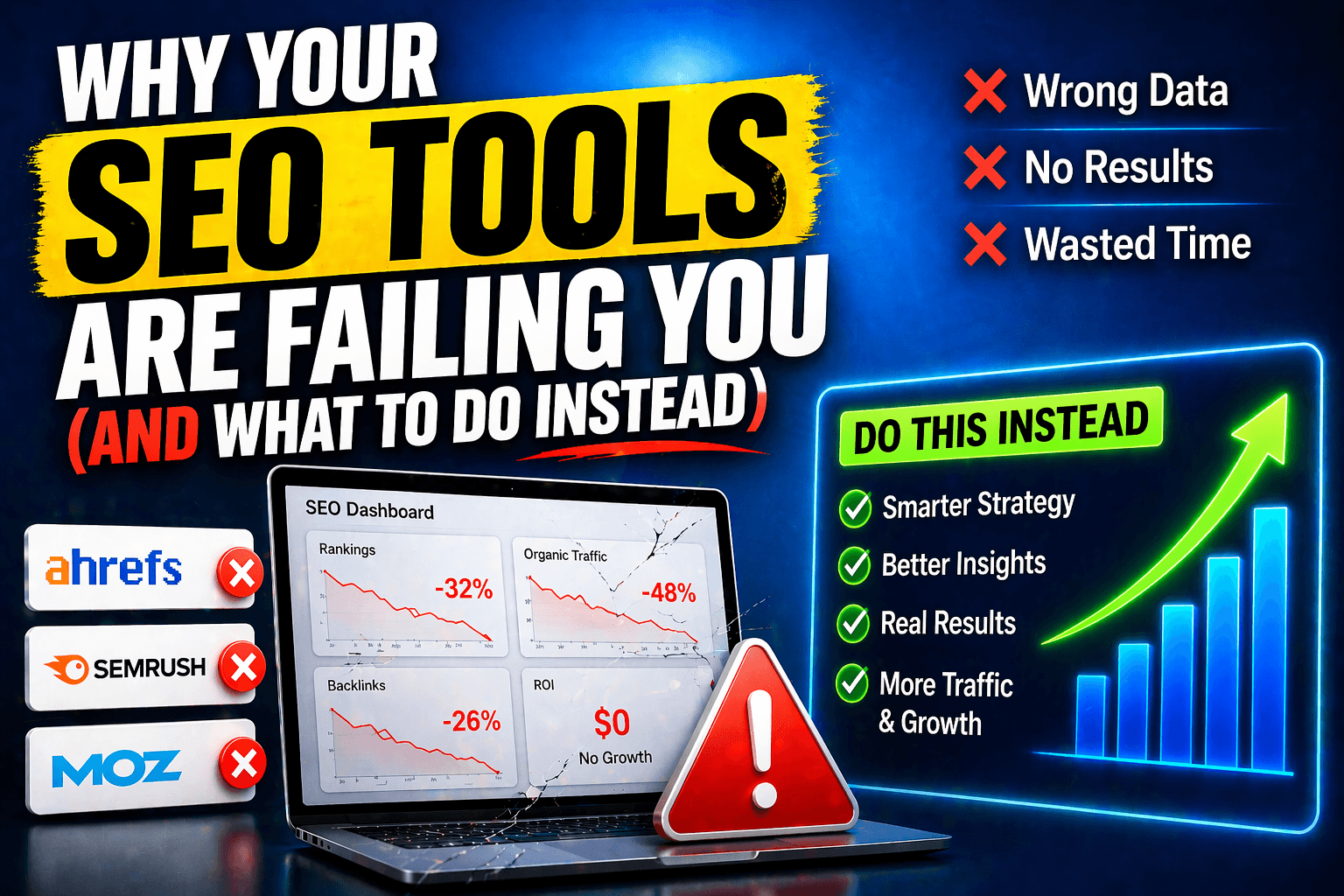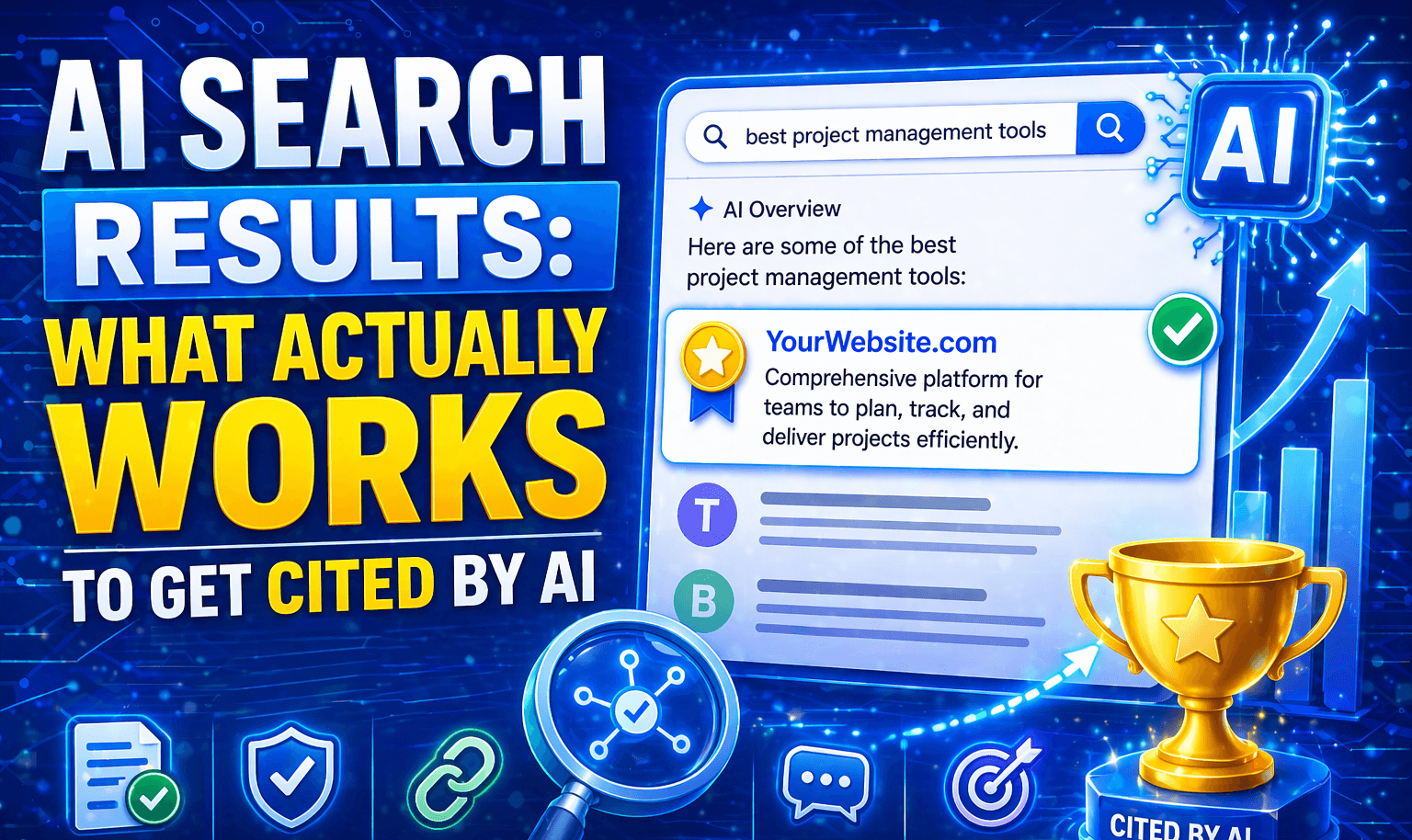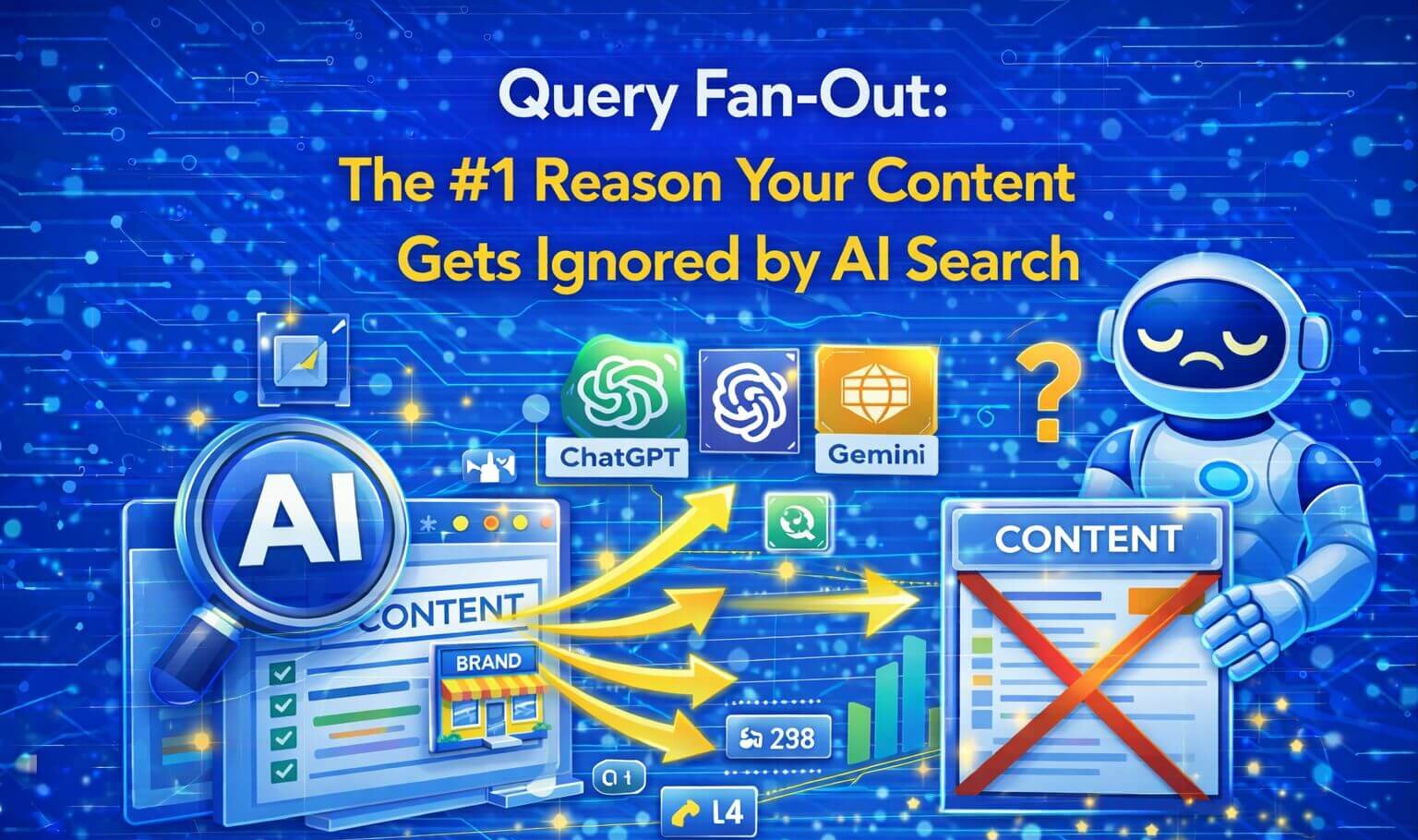
Most website owners assume something very simple: if a page ranks on Google, it should automatically appear everywhere.
But in 2026, that assumption is breaking.
You might be ranking on page one, getting steady organic traffic, and still notice something strange. When someone asks ChatGPT or other AI tools about your topic, your website is not mentioned at all.
This is not a bug. It is a shift in how search visibility works.
Google SEO gets you rankings. ChatGPT SEO determines whether AI systems even understand you enough to mention it.
And that difference is becoming very important. This difference decides your customer volume and how many new customers are reaching out to you.
Why Google Ranking No Longer Guarantees AI Visibility
Google and AI search systems are built on completely different logic. Google focuses on SEO while AI search focuses on AEO, which means Google focuses on ranking pages based on signals like backlinks, keywords, and engagement.
AI systems focus on understanding meaning and generating answers instead of listing pages.
So a page that is perfectly optimised for Google can still fail in AI systems if the content is not clearly structured, the topic is not deeply understood, the website lacks external references, or the information is not easy to extract into an answer.
This shift is also discussed in emerging AI SEO research, where visibility is no longer tied only to rankings but to how models interpret and reuse content. More insights on this change are covered in resources like https://www.llmaudit.ai/blog/chatgpt-visibility-issues/, which breaks down why ranking does not guarantee AI presence.
The Real Reason Your Website Is Missing in ChatGPT SEO
The issue is rarely technical. It is usually about how your content is interpreted.
1. Your content is built for ranking, not for explanation
Most SEO content is written to include keywords and satisfy ranking signals.
But AI systems don’t “rank pages” in the same way. They extract meaning, and then they decide the rankings.
If your content is keyword-heavy, repetitive, or indirect, AI struggles to convert it into a clean answer and moves on. Therefore, having simpler content is not a bad thing; AI actually likes that.
2. Your website is not seen as an “entity”
AI systems don’t just read pages. They try to understand what a brand is and whether it is actually worth the recommendations.
If your website does not consistently appear across the web in a clear context, it becomes harder for AI to treat it as a reliable source. And hence, AI won’t include you in its answers.
This idea of entity clarity is becoming central in AI search systems and is also explored in, where the focus is on how brands are interpreted by AI models or how to make AI trust your brand.
3. Your content does not match how people ask AI
Search engines and AI are not queried the same way anymore.
Google queries look like “best CRM tools India.”
AI queries look like “I run a small business in India. What CRM should I use and why?”
If your content does not answer full questions naturally, AI does not pick it.
Also, if your content does not align with the user’s question, you will not be included in AI answers.
4. Your content is not structured for extraction
AI systems prefer content that is easy to break into answers.
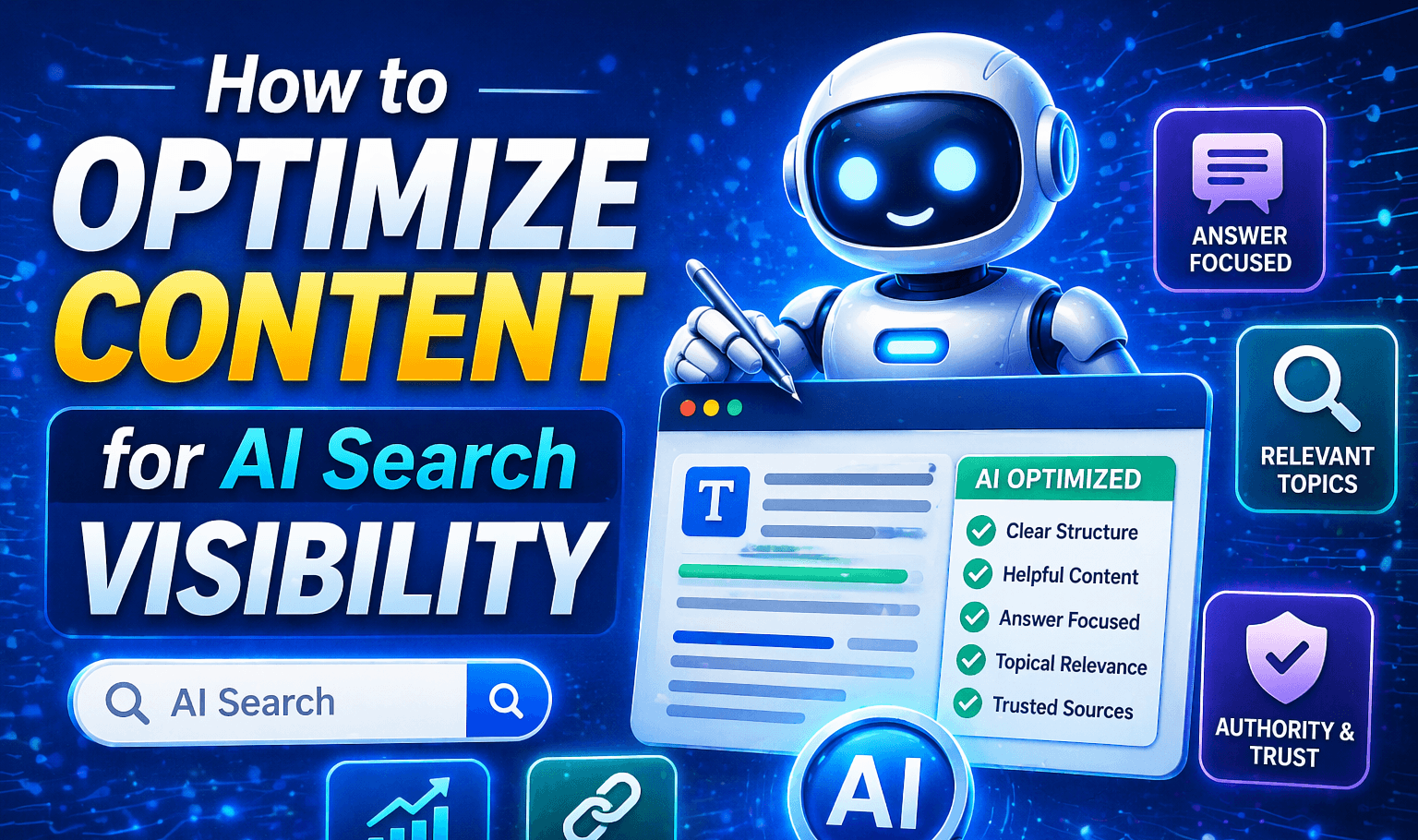
That means clear headings, direct explanations, minimal fluff, and logical flow.
If your content requires interpretation, AI is less likely to use it. So, avoid using complex jargon and stick to easy language.
What ChatGPT SEO Actually Means
ChatGPT SEO is not a new trick or plugin.
It is the process of making your content understandable and reusable by AI systems.
It focuses on clarity over complexity, meaning over keywords, context over repetition, and structure over density.
In simple terms, it is not about ranking higher. It is about becoming understandable enough to be cited.
This is also why tools like LLM Audit are emerging, helping brands understand how visible they actually are in AI-driven search environments. These tools help brands not only check their AI visibility but also give recommendations on the part where the brands are lagging.
How to Improve Your AI Visibility
You do not need to rebuild everything. You need to adjust how you present information.
Write like you explain, not like you optimize. This will make your content easy to understand.
Answer full questions, not just keywords. This will help with detailed explanations.
Strengthen your brand signals across platforms, not just your website. So that your brand can be tracked from everywhere.
Make your content easy to extract using clear sections and direct explanations, making you easily accessible.
Build presence outside your website because AI systems trust patterns across multiple sources.
Why This Shift Matters Right Now
We are in a transition phase where search is splitting into two systems.
Google still drives traditional SEO traffic.
AI systems are becoming answer engines.
And these two systems do not treat content the same way.
That means a website can be successful in one and invisible in the other.
Recent discussions in AI SEO communities, including https://www.llmaudit.ai/blog/, highlight that this gap is widening as generative engines become more dominant in discovery.
Final Thought
Ranking on Google is no longer the final goal.
It is only one part of visibility, and visibility is not enough.
The next layer is whether AI systems can understand, trust, and reuse your content in answers.
ChatGPT SEO is not about gaming the system. It is so much more than that.
It is about making sure your content still exists in a world where answers are generated, not just listed. The answers that help users get real solutions.
If your website is missing in AI search today, it is not because you are doing SEO wrong.
It is because SEO itself has expanded into something bigger, that is, AEO.
FAQ
ChatGPT SEO is the process of optimising your content so AI tools like ChatGPT can understand, trust, and use it in their answers. Unlike traditional SEO, it focuses more on clarity, structure, and meaning rather than just keywords and backlinks.
This happens because Google ranks pages based on SEO signals, while ChatGPT selects content based on how well it understands and trusts the information. If your content is not clear, structured, or widely referenced, AI systems may ignore it.
To improve visibility in AI search:
Write clear and simple content
Answer real user questions
Structure your content properly
Build authority across multiple platforms
Strengthen your overall brand presence
These steps help AI systems pick your content more easily.
You can manually test by asking AI tools about your niche and checking if your website appears. For a deeper analysis, platforms like LLM Audit help track how your brand shows up across AI systems.