The Shift from Search Rankings to AI Answers
Search is changing fast. Not long ago, ranking on Google was the main goal. Today, that’s only part of the picture. As AI tools generate direct answers, visibility works in an entirely new way — and that’s exactly where the concept of an AI audit becomes important.
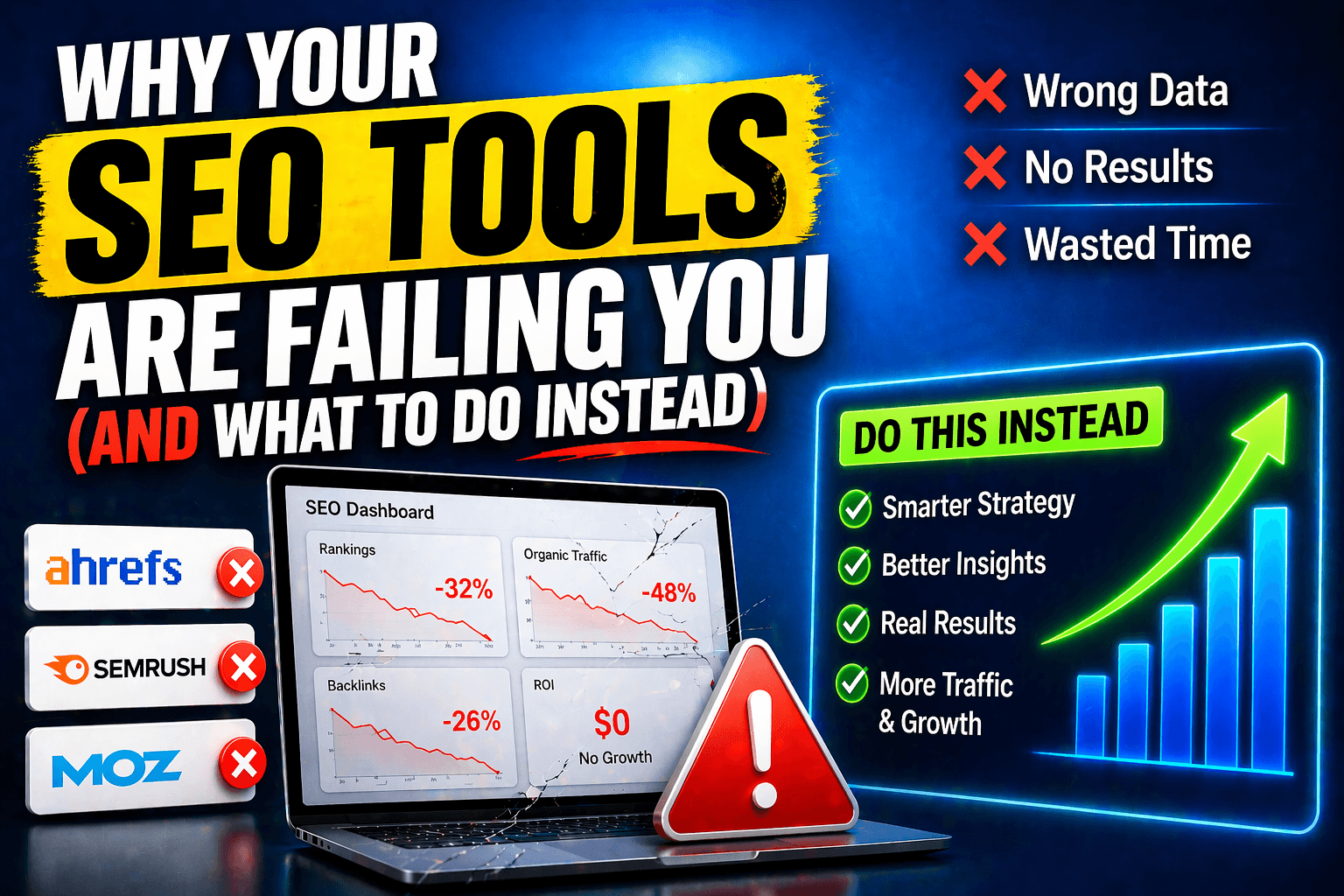
Most teams still focus heavily on SEO audits. They check rankings, keywords, and backlinks. But they often overlook one critical question: does their content actually get used by AI? That’s the gap a proper AI audit helps close.
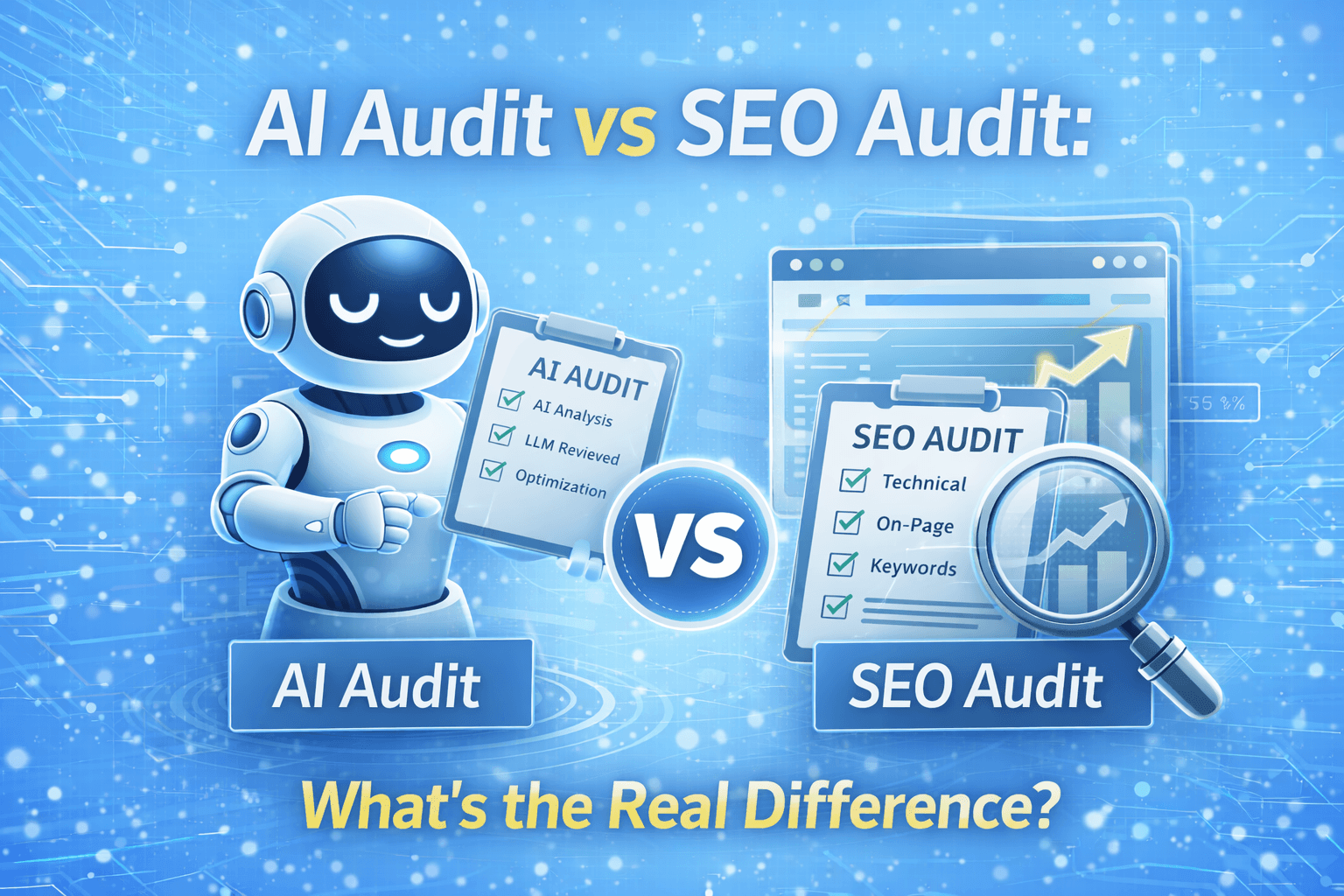
What an SEO Audit Actually Measures
An SEO audit examines how your website performs in search engines. It tells you whether your pages rank, whether they are optimized, and whether your site meets technical standards.
Typically, it covers:
- Keyword rankings
- Backlinks and domain authority
- Technical performance
- On-page SEO elements
In short, it focuses on getting discovered. However, it doesn’t tell you what happens after that — especially when users rely on AI-generated answers instead of clicking through to a website.
What an AI Audit Focuses On
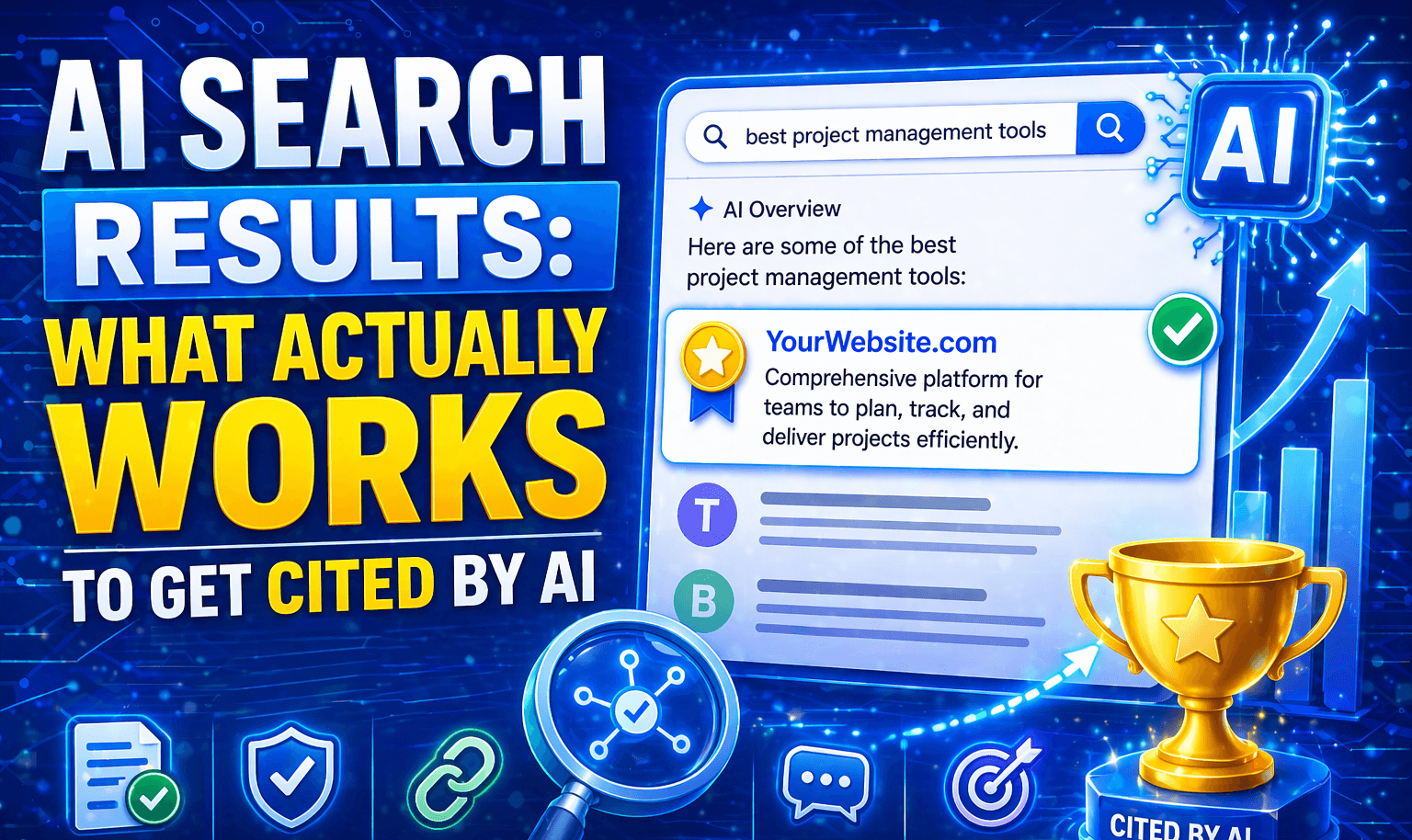
An AI audit, by contrast, looks at what happens beyond rankings. Rather than asking whether you rank, it asks whether AI tools actually pick, summarise, and use your content in their responses. Specifically, it asks:
- Do AI tools cite our content?
- Is our content easy to extract and reuse?
- Are competitors getting picked instead of us?
That’s a fundamentally different way to measure visibility and in 2026, it’s becoming just as important as traditional SEO.
Why Rankings Alone Are No Longer Enough
This distinction matters more than most teams realize. You can sit at the top of search results and still not appear in a single AI-generated answer.
Here’s why that gap exists:
- AI tools summarize content instead of linking to it
- Users get instant answers without clicking anywhere
- Fewer visits go to websites, even highly ranked ones
As a result, understanding this gap early gives you a clear advantage before it quietly erodes your visibility.
How AI Evaluates Content Differently
Another major difference lies in how content gets evaluated. SEO audits focus primarily on keywords and backlinks. An AI audit, on the other hand, focuses on usability and clarity.
AI systems consistently prefer content that is:
- Direct and easy to understand
- Well-structured with clear headings
- Simple enough to scan and extract quickly
So even if your content ranks well, unclear or overly long writing can still prevent AI tools from using it. That’s precisely what a content review through an AI lens uncovers — and where many teams find their biggest quick wins.
How This Changes Your Content Strategy
Running this kind of audit shifts how you approach content creation altogether.
Instead of writing purely to rank, you start writing to be genuinely useful. In practice, that means:
- Answering questions early in the content
- Structuring pages with clear sections
- Explaining concepts in plain, simple language
This shift is what drives real visibility in AI-driven search — and it’s something a traditional SEO audit simply won’t surface.
Why You Need Both
It’s worth being clear: an AI-focused audit doesn’t replace an SEO audit. Both serve different and complementary purposes.
- SEO audit → Helps users find you in search
- AI audit → Helps AI tools use and cite your content
Together, they give you full visibility across both traditional and AI-driven search. Tools like LLM Audit make the second part easier by showing exactly where your content appears inside AI responses and what you can do to improve.
The Future of Visibility in Search
As search continues to evolve, the role of auditing for AI visibility will only grow. Rankings still matter — but they are no longer the finish line.
Put simply:
- SEO tells you where you stand in search results
- An AI-focused audit tells you whether your content is actually being used
In today’s search landscape, that second question is what defines real, lasting visibility.
FAQs
Absolutely. Ranking and being cited by AI are two separate outcomes. Many high-ranking pages never appear in AI answers because the content isn’t structured or clear enough for AI systems to extract.
Yes. Platforms like LLM Audit help you track how your content performs across AI tools, identify where competitors have an edge, and find specific areas to improve.
Yes, always. SEO helps users discover your content through search engines. AI visibility ensures that content gets included in AI-generated answers. Both work best together, not in isolation.