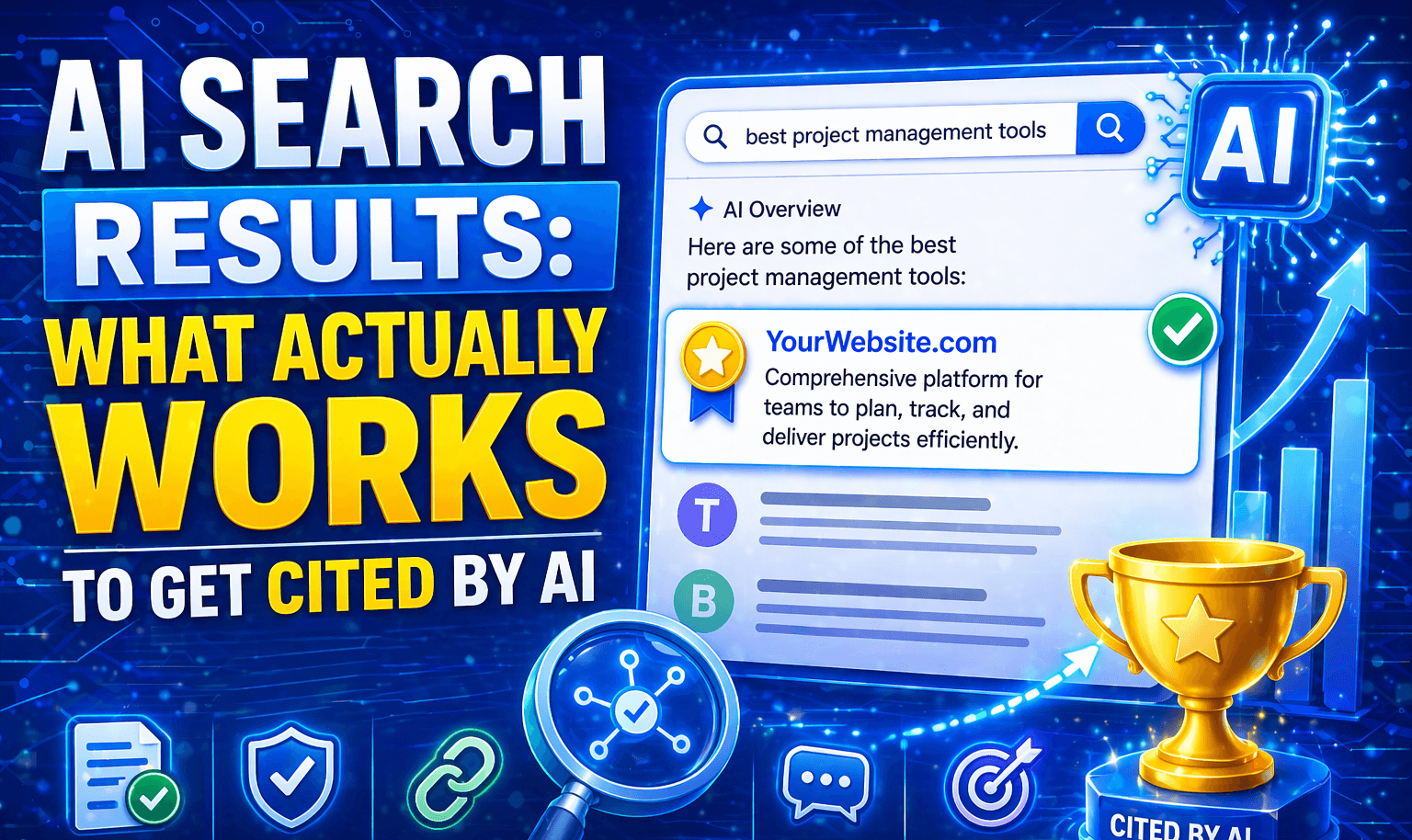
Search is no longer just about links. It’s about answers.
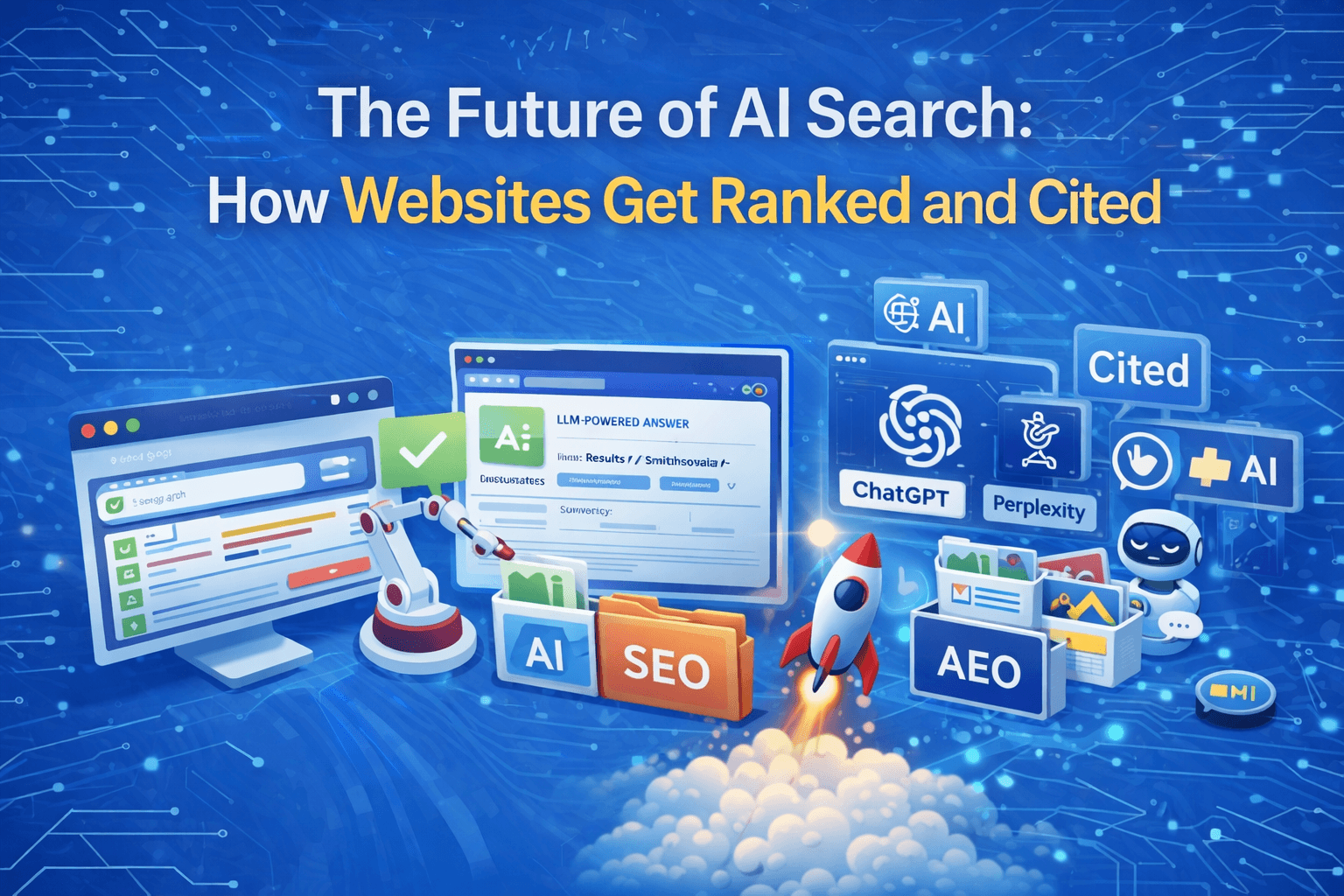
AI search is becoming the default way people discover information. Platforms like ChatGPT, Gemini, and Perplexity are changing how users interact with content. Instead of browsing multiple results, users now rely on getting direct, synthesised responses.
This raises an important question: how do AI systems decide what to include?
From Ranking to Selection
Traditional search engines ranked pages and displayed them as options. In contrast, AI search selects a limited number of sources to generate a final answer.
This means visibility is no longer about being one of many results. It is about being chosen.
If your website is not selected, it is effectively invisible.
The Core Shift
To understand how content performs, it’s important to see what LLMs prioritize.
Unlike traditional systems, AI search focuses on whether content can be used directly in an answer. It evaluates clarity, structure, and usefulness rather than just keywords.
This shift defines how AI engines decide which websites to cite.
1. Clarity and Direct Answers
Content that performs well provides clear, immediate answers.
Pages that:
- Address the query early
- Stay focused
- Avoid unnecessary detail
They are more likely to be selected in the results.
2. Structured Content
Structure is essential.
Content with:
- Clear headings
- Bullet points
- Logical flow
Without structure, even good content may be ignored.
3. Context and Completeness
Another key factor is completeness.
AI systems prefer content that:
- Covers the topic fully
- Provides context
- Includes examples
4. Technical Accessibility
Technical factors also influence visibility.
If your website uses:
- Heavy JavaScript
- Blocked crawlers
- Poor rendering
then may not fully access your content.
This creates a gap between what users see and what systems process.
5. Structured Data and Signals
Schema markup is playing an increasingly important role in.
By using structured data, you help LLMs understand your content more clearly. This improves the chances of being selected and cited.
6. Authority Beyond Your Website
AI search does not rely only on your website.
It evaluates:
- Mentions on external platforms
- Reviews and discussions
- Cross-references
Strong presence across sources improves trust.
7. Consistency Across Queries
Consistency is another signal.
If your content:
- Appears across multiple queries
- Maintains quality
- Covers topics thoroughly
It increases your chances of repeated selection.
What AI Search Doesn’t Prioritise as Much
While traditional SEO still matters, AI reduces the importance of some factors.
Backlinks, keyword density, and exact-match optimisation are not enough on their own. More usability and clarity are essential.
The Role of GEO
As search evolves, GEO (Generative Engine Optimization) becomes important.
GEO focuses on:
- Structuring content
- Improving clarity
- Increasing citation likelihood
In this new AI world, the question is no longer where you rank.
It is whether you are included in the answer.
Check your AI visibility now with llmaudit.ai.
FAQs
AI search refers to search systems like ChatGPT, Gemini, and that generate direct answers instead of showing a list of links, changing how users discover information online.
Traditional search engines rank and display multiple results, while AI search selects and synthesises information from a few sources to provide a single, direct answer.
AI answer engines prioritize content that is clear, well-structured, and provides complete answers, along with signals like accessibility, authority, and consistency across sources.
Yes, SEO still helps with discoverability, but it is not enough on its own. AI search requires additional focus on content clarity, structure, and usability.
Your website may lack structured content, clear answers, technical accessibility, or sufficient authority signals, which reduces its chances of being selected by AI systems.
GEO (Generative Engine Optimisation) focuses on optimising content to be selected and cited in AI search results, complementing traditional SEO strategies.