Search is changing faster than most marketers realize.
For the past two decades, Google SEO determined whether your website received traffic. If you ranked high in Google results, you won.
But today, millions of people are no longer starting with Google.
They are starting with AI assistants like:
- ChatGPT
- Perplexity
- Gemini
- Microsoft Copilot
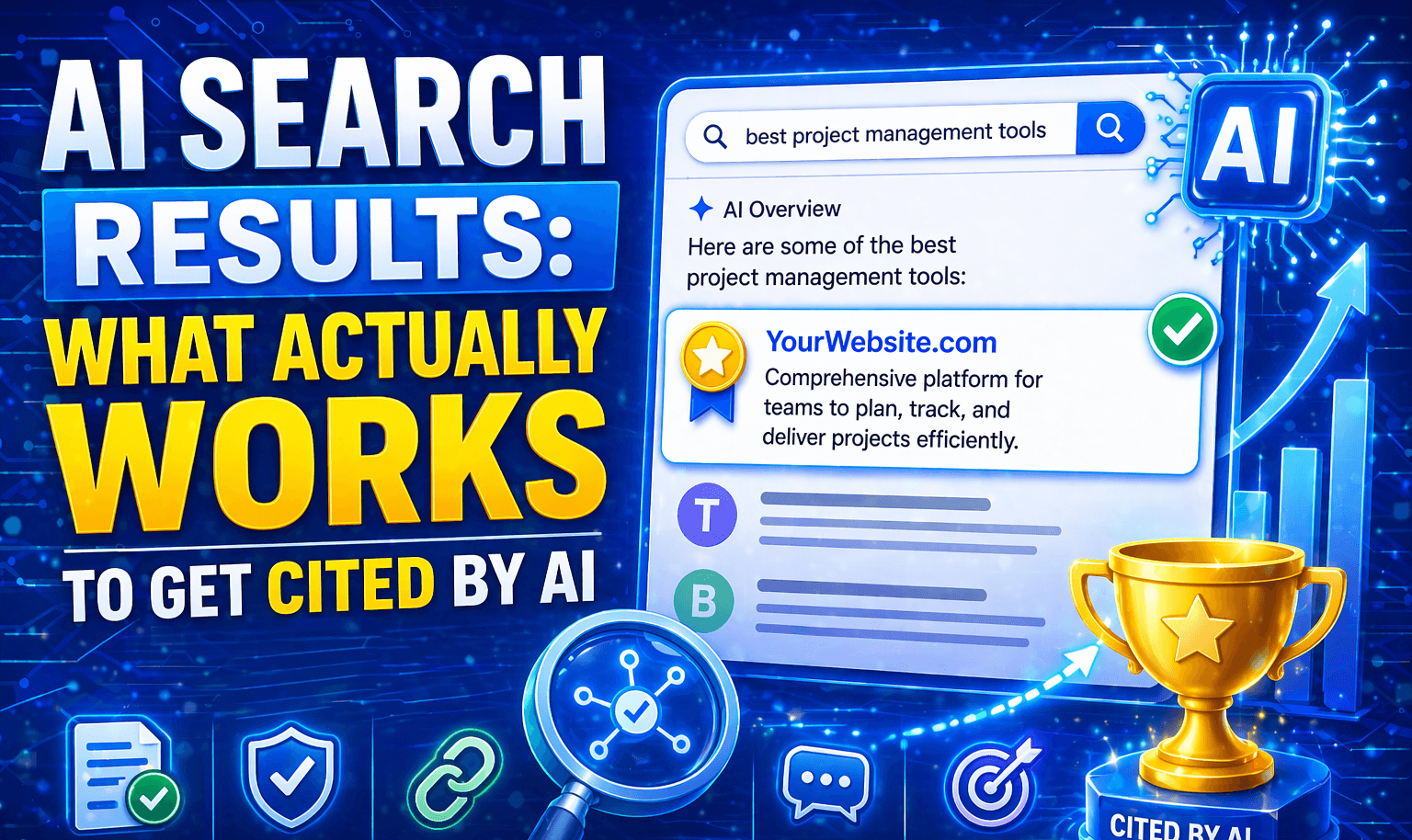
These systems don’t simply show links. They generate answers and cite sources they trust.
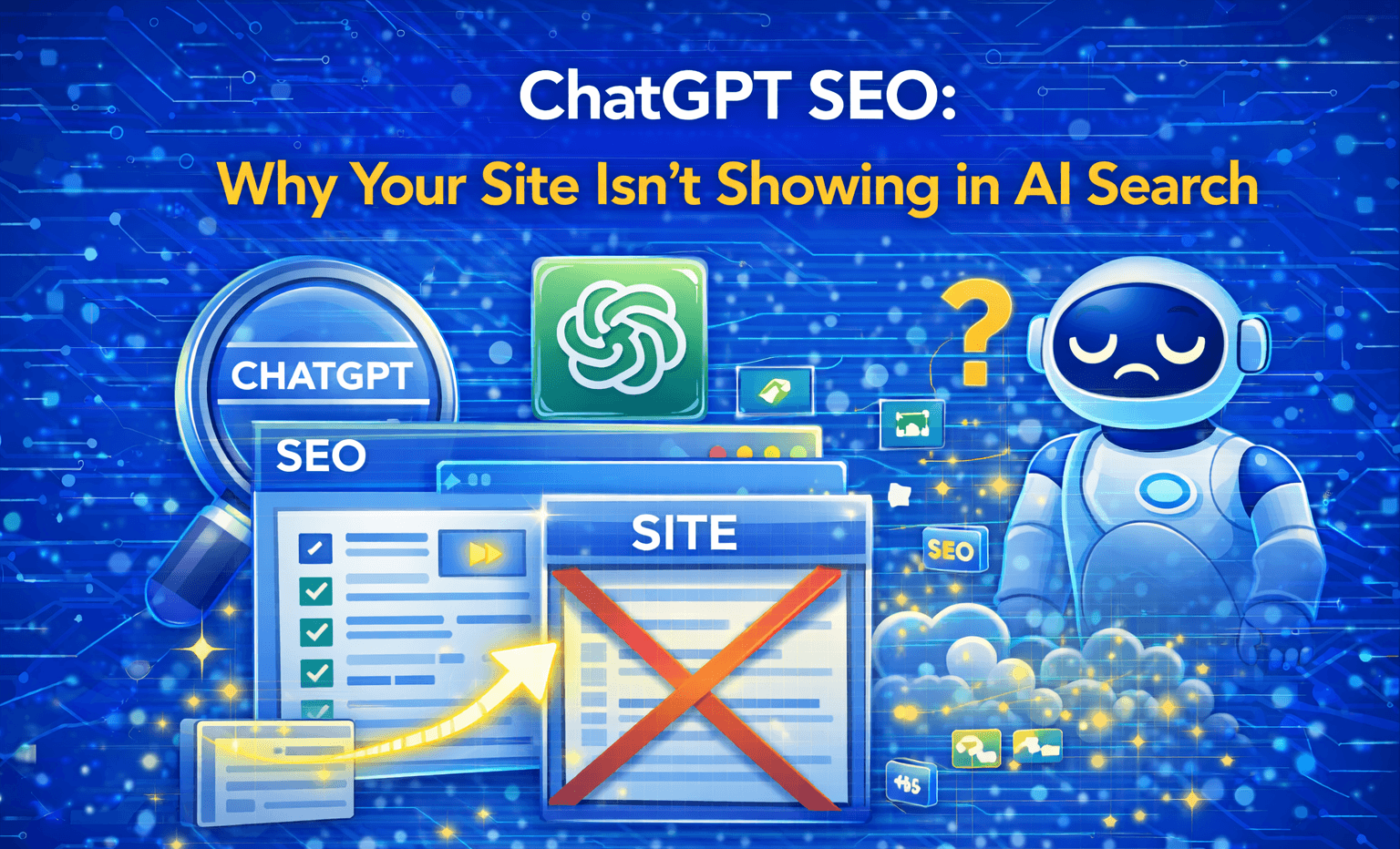
If your website is not cited, you simply do not exist in that answer.
And the most concerning part?
Most companies don’t even know they are invisible because traditional SEO tools cannot detect AI visibility problems.
The Scale of AI Search (2026 Data)
AI search is already massive.
| Platform | Estimated Usage | Key Insight |
|---|---|---|
| ChatGPT | ~2 billion queries/day | Largest AI assistant globally |
| Google AI Overviews | Appears in ~54% of Google searches | Replacing traditional blue links |
| Perplexity | ~3B monthly visits | Rapidly growing AI search engine |
| Copilot | Integrated in Microsoft ecosystem | Enterprise + Windows users |
Monthly Reach Comparison
Users (Millions)

Google Search        ██████████████████████████████████████████████████
ChatGPT              ██████████████████████
Perplexity           ███████
Copilot              █████████
Together, AI assistants reach over 2 billion users every month.
This means your brand could be recommended — or ignored — by AI before a user ever searches on Google.
The AI Blind Spot Problem
Research analyzing thousands of AI responses shows a massive disconnect between Google rankings and AI citations.
AI vs Google Visibility
| Metric | Traditional Search | AI Search |
|---|---|---|
| Ranking Factor | Backlinks | Trust & citations |
| Output | Blue links | Generated answers |
| SEO tools visibility | High | Almost none |
| Citation logic | Domain authority | Content clarity |
One major study found:
87.3% of B2B companies have “AI blind spots.”
These are high-value queries where a company ranks in Google but never appears in AI responses.
Examples:
- “Best CRM for startups”
- “Best SaaS analytics tool”
- “How to choose a payment gateway”
These are buying-intent queries.
If AI recommends your competitor instead of you, the lead is already lost.
Citation Behavior Across AI Platforms
AI models do not think alike.
Each platform prioritizes different information sources.
AI Citation Sources
| Platform | Primary Citation Sources | Behavior |
|---|---|---|
| Gemini | Brand websites | Prefers structured factual content |
| ChatGPT | Multi-source verification | Prefers widely referenced brands |
| Perplexity | Direct web + community | Loves niche directories & reviews |
Source Preference Distribution
| Source Type | Gemini | ChatGPT | Perplexity |
|---|---|---|---|
| Brand Websites | 52% | 34% | 29% |
| Media Articles | 21% | 30% | 25% |
| Directories | 11% | 17% | 24% |
| Community Platforms | 7% | 11% | 16% |
| Other Sources | 9% | 8% | 6% |
This means one SEO strategy will not work for all AI engines.
Why AI Engines Ignore Websites That Google Loves
Traditional SEO focuses on ranking pages.
AI models focus on answering questions.
Because of that, they evaluate websites using completely different signals.
Key AI Visibility Signals
| Factor | Importance for AI | Impact |
|---|---|---|
| Crawlability | Critical | AI bots must access pages |
| Content structure | Very High | Clear headings improve citations |
| Entity recognition | High | Consistent brand information |
| Schema markup | High | Helps models understand context |
| External references | High | Confirms trustworthiness |
Research shows something surprising:
80% of URLs cited by AI models do not rank in Google’s top 100 results.
This proves something important:
AI visibility ≠ Google SEO success
The 5 Biggest Technical Reasons Websites Become Invisible to AI
1. Blocking AI Crawlers
There are now 21+ AI crawlers scanning the internet.
The most common ones include:
- GPTBot
- PerplexityBot
- CCBot
- Google-Extended
Many websites block them accidentally.
Most Blocked AI Crawlers
| Bot | % of Websites Blocking |
|---|---|
| GPTBot | 5.89% |
| CCBot | 3.2% |
| PerplexityBot | 2.7% |
If these bots cannot access your content, it never enters the AI knowledge pipeline.
2. Poor Content Structure
AI models love structured content.
Pages with clear headings are:
2.8x more likely to be cited by AI systems.
Example Structure AI Prefers
Bad structure:
Long paragraph with no headings
Hard to scan
Buried answers
Good structure:
H1: Question
H2: Clear answer
H3: Supporting explanation
Bullet points
Tables
The clearer your content is, the easier it is for AI to extract answers.
3. Missing Schema Markup
Structured data helps AI models understand your content instantly.
Important Schema Types for AI
| Schema Type | Purpose |
|---|---|
| FAQPage | Extract direct answers |
| Article | Content classification |
| Organization | Brand identity |
| Product | Product details |
| Review | Social proof |
Without schema, AI systems must guess your meaning.
And when they guess wrong, they often skip the page entirely.
4. Weak Brand Entity Signals
AI models rely heavily on entity recognition.
They try to connect information across:
- Websites
- Wikipedia
- Press releases
- Business directories
If your brand information conflicts across platforms, AI models lose confidence.
Example of Entity Conflict
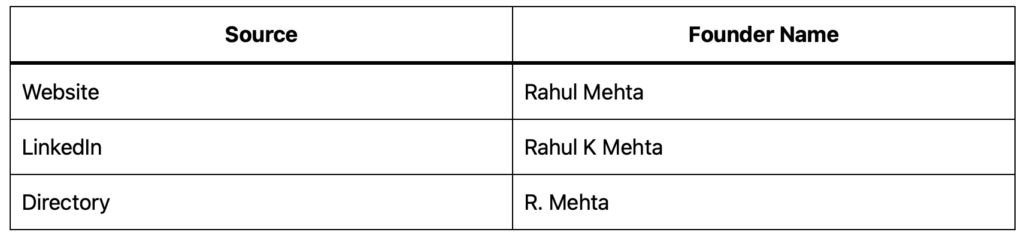
To AI models, this might look like three different people.
That confusion reduces citations.
5. JavaScript-Heavy or Slow Websites
AI crawlers behave differently from traditional search bots.
They struggle with:
- Heavy JavaScript rendering
- CAPTCHA pages
- Cloudflare blocking
- Slow loading times
Research shows:
63% of ChatGPT agent visits fail due to HTTP errors or blocking rules.
If the crawler cannot quickly read your content, it simply moves on.
What “AI Invisible” Looks Like in Real Life
Imagine a buyer asking ChatGPT:
“What’s the best analytics tool for SaaS startups?”
The AI might generate an answer like this:
Example AI Response:
- Mixpanel — great for product analytics
- Amplitude — powerful behavioral insights
- Heap — automatic event tracking
Your company might be just as good — or better.
But if the AI doesn’t cite you, the customer never discovers you.
AI Recommendation Funnel
User Question
      ↓
AI Generates Answer
      ↓
Top 3 Brands Mentioned
      ↓
User Chooses One
Everyone else becomes invisible.
AI Visibility vs Traditional SEO
This shift is often called GEO — Generative Engine Optimization.
SEO vs GEO Comparison
| Feature | SEO | GEO |
|---|---|---|
| Platform | AI assistants | |
| Output | Links | Answers |
| Ranking method | Algorithms | Knowledge synthesis |
| Traffic model | Click-through | Direct recommendation |
| Optimization | Keywords | Information clarity |
Companies that optimize for GEO are already seeing dramatically better conversions.
AI Traffic Converts Much Better
AI-driven traffic has a very different behavior pattern.
| Traffic Source | Average Conversion Rate |
|---|---|
| Google Organic | 2.8% |
| Social Media | 1.6% |
| AI Assistants | 14.2% |
Conversion Comparison
Conversion Rate

AI Traffic        ██████████████ 14.2%
Google Search     ███ 2.8%
Social Media      ██ 1.6%
Users asking AI assistants are closer to making decisions.
Which makes AI visibility extremely valuable.
How to Check If Your Website Is Invisible to AI
Traditional SEO tools cannot answer questions like:
- Does ChatGPT cite my brand?
- Can GPTBot crawl my website?
- Does my content structure help AI extraction?
- Is my schema helping AI interpret my pages?
You need an LLM-specific audit.
An AI visibility audit checks:
| Audit Category | What It Measures |
|---|---|
| AI crawler access | Whether bots can reach pages |
| Content structure | AI readability |
| Schema coverage | Machine understanding |
| Brand entity signals | Cross-platform consistency |
| Citation potential | AI answer likelihood |
This is exactly what LLMAudit.ai is designed to analyze.
The GEO Market Is Exploding
Generative Engine Optimization is becoming a massive industry.
GEO Market Growth
| Year | Market Size |
|---|---|
| 2024 | $848 million |
| 2026 | $3.2 billion |
| 2030 | $12.9 billion |
| 2034 | $33.7 billion |
Companies that establish AI visibility early will gain a compounding advantage.
Just like early SEO winners did in the 2000s.
The Opportunity Window Is Still Open
Right now, the companies dominating AI answers are not always the biggest brands.
They are simply the best optimized for AI understanding.
That advantage will become harder to close over time.
Because AI systems learn continuously from:
- citations
- references
- trusted sources
- consistent entities
If your brand is absent today, the gap widens over time.
Final Takeaway
AI search is no longer an experiment.
It is rapidly becoming the first place people ask questions.
And unlike Google search, where you can at least see rankings, AI invisibility happens silently.
Your website may be:
- uncrawled
- misunderstood
- uncited
And you would never know.
Running an AI visibility audit is now as essential as running an SEO audit.
Because in the era of AI search, the real question is no longer:
“Do you rank on Google?”
It’s:
“Does AI trust your website enough to cite it?”
LLMAudit.ai helps founders, marketers, and growth teams understand and improve their visibility across AI-powered search engines.
Instant website audits.
No signup required.
Run your free AI visibility audit and see whether your website is **showing up — or disappearing — in AI search.