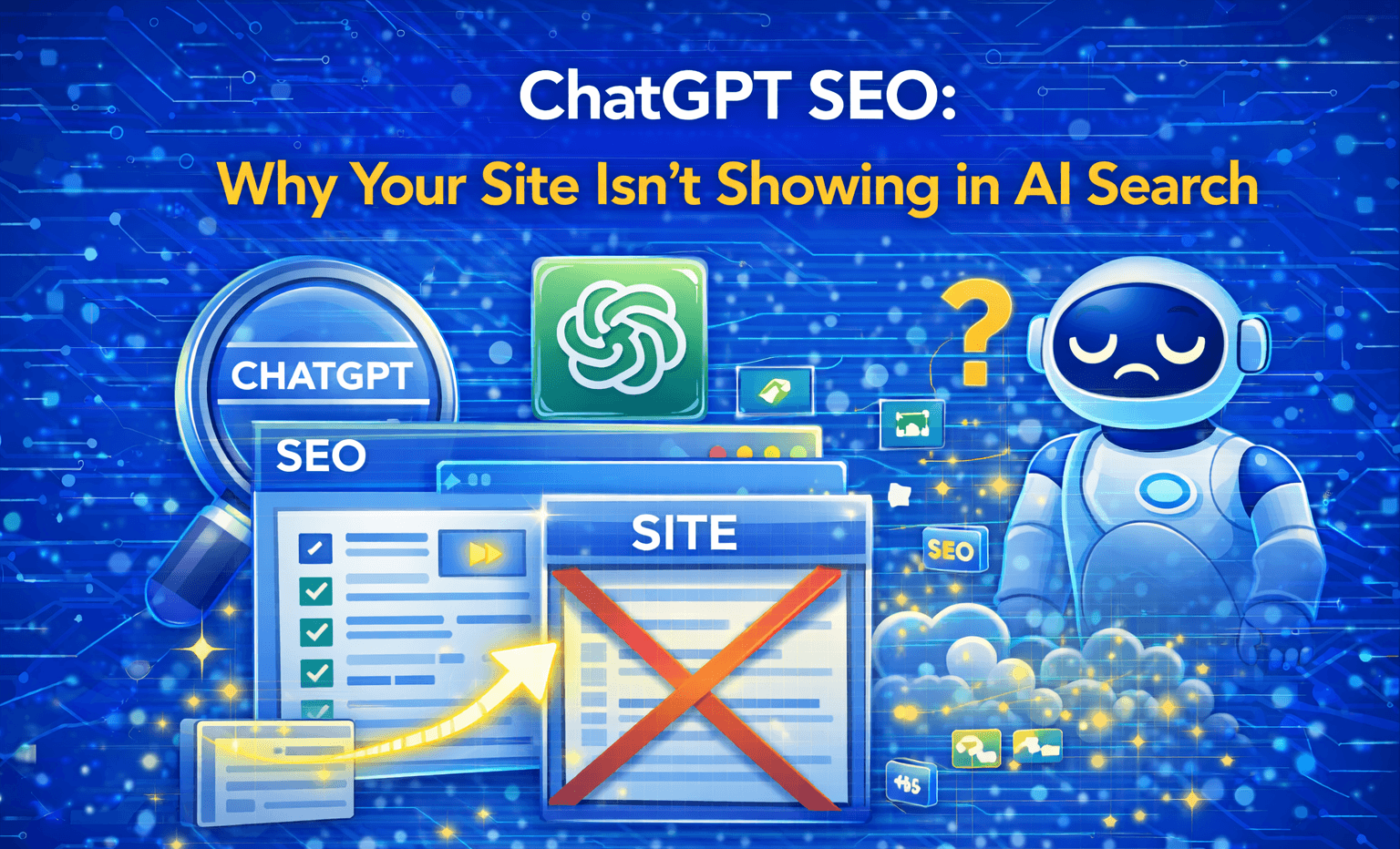
Open AI ChatGPT right now. Type the name of your product category. Your three biggest competitors will likely appear. Your brand? Probably not there.
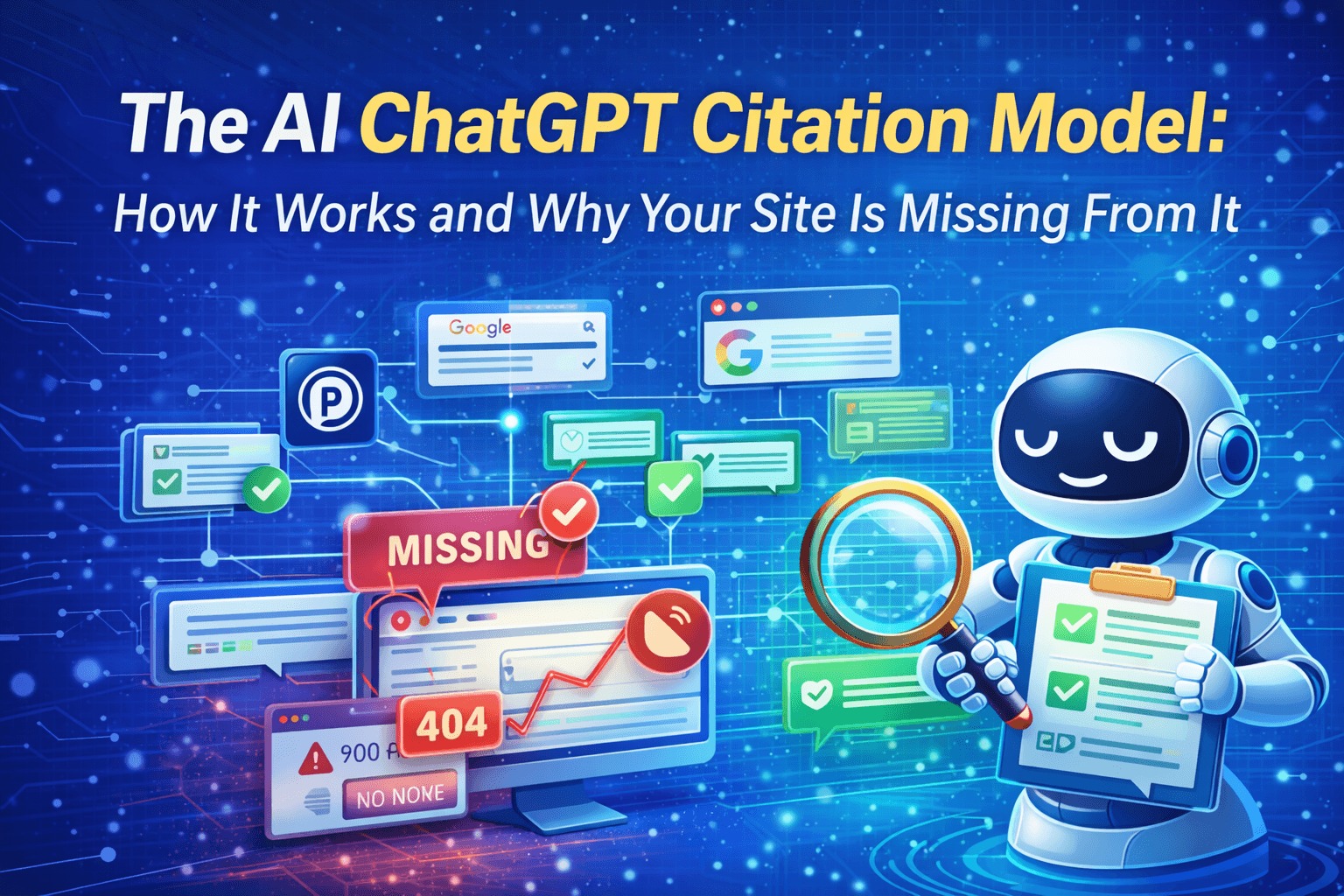
This is not bad luck. It is not a glitch. It is the AI ChatGPT citation model working exactly as designed—and your website is simply not meeting its requirements.
How AI ChatGPT Citation Model Actually Selects
ChatGPT does not rely solely on its training data to answer questions. For many queries, especially commercial and research ones, it actively fetches live web sources through a process called Retrieval-Augmented Generation (RAG)
Here is how that process works, step by step:
1. Query fan-out
ChatGPT breaks your user’s question into 1–3 sub-queries and searches each one, mostly via the Bing Search API. It is not searching for your site directly; it is searching for answers to specific sub-questions.
2. Source retrieval
From the search results, ChatGPT fetches the raw content of candidate pages. This is where the first filter happens: if your page blocks AI crawlers or relies on JavaScript rendering, the content is never retrieved.
3. Content extraction
ChatGPT scans each retrieved page for extractable facts. It reads the first 1–2 sentences of each section first. If those sentences are not direct answers, it moves on. Vague intros, marketing language, and fluffy openers are all skipped.
4. Trust scoring
Before citing, ChatGPT applies a trust signal check—schema markup, entity consistency across the web, and third-party mentions all increase the likelihood of a citation. Low-trust pages are retrieved but not cited.
5. Citation included in answer
Only sites that pass all four stages make it into the answer. This is why ChatGPT cites only 15% of the pages it actually retrieves—most are eliminated in Steps 2, 3, or 4.
Google vs ChatGPT: What Each System Rewards
Understanding why your Google rankings do not translate to AI ChatGPT visibility starts with one simple truth: the two systems are measuring completely different things. Here is a direct comparison:
| Factor | Google SEO | ChatGPT Citation Model |
| Backlinks | ✔ High impact | ✘ Minimal impact |
| Keyword density | ✔ Relevant | ✘ Irrelevant |
| Schema markup | ~ Helpful | ✔ Critical |
| Static HTML rendering | ~ Preferred | ✔ Required |
| Direct answer in first sentence | ~ Useful for snippets | ✔ Required for extraction |
| AI crawler access (robots.txt) | ✘ Not a factor | ✔ Mandatory |
| llms.txt file | ✘ Not a factor | ✔ Strongly recommended |
| Entity consistency across web | ~ Moderate impact | ✔ High impact on trust |
| Page speed | ✔ Core Web Vitals | ✔ Affects crawl success |
Why most Sites are Missing from the AI ChatGpt Citation Model
These are the most common reasons well-built, well-ranked websites still fail the AI ChatGPT citation model:
- Blocked AI crawlers: GPTBot, ClaudeBot, or PerplexityBot are disallowed in robots.txt—often by CDN providers like Cloudflare automatically, without the site owner knowing.
- JavaScript walls: Sites built on React, Vue, or Angular often return empty HTML to AI crawlers. The content users see is never delivered to ChatGPT.
- No schema markup: Without structured data, ChatGPT cannot verify what your brand is, who wrote the content, or whether it is trustworthy enough to cite.
- Vague section intros: ChatGPT reads the first 1–2 sentences of each section to decide if it is worth extracting. Openers like “In today’s digital landscape…” are immediately skipped.
- No llms.txt file: Without this, AI crawlers have no map of your site. Important pages may never be discovered during the retrieval phase.
- Inconsistent entity signals: If your brand is described differently across your site, social profiles, and third-party sources, ChatGPT’s trust score drops, and it stops citing you.
The 5 Fixes That Get You Into the AI ChatGPT Citation Model
Here is exactly what to address, in order of priority:
| Fix | What to do | Priority |
| Unblock AI crawlers | Check robots.txt for GPTBot, ClaudeBot, OAI-SearchBot, PerplexityBot. Remove any Disallow rules. Check Cloudflare AI bot settings. | Critical |
| Fix rendering | View page source on your key pages. If content is missing from raw HTML, migrate to server-side rendering or static HTML for important pages. | Critical |
| Add schema markup | Implement Organisation, Article, and FAQPage schema at minimum. Use Google’s Rich Results Test to validate. JSON-LD is the preferred format. | High |
| Rewrite section intros | Every H2 section should open with a direct, factual answer in the first sentence. Replace vague openers with definitions, direct claims, or clear answers. | High |
| Create llms.txt | Add a plain-text file at yourdomain.com/llms.txt listing your most important pages with short descriptions. Guides AI crawlers to the right content first. | Medium |
Check your AI ChatGPT citation model ability now with llmaudit.ai.
FAQs
It’s how AI ChatGPT selects and cites sources when generating answers, rather than just listing links.
It prefers content that is clear, structured, relevant, and comes from trusted sources.
Your content may be unstructured, too promotional, or lacking authority and clear answers.
Content with direct answers, simple structure, FAQs, and clear headings.
Use tools like llmaudit.ai or test prompts manually on ChatGPT and other AI tools.