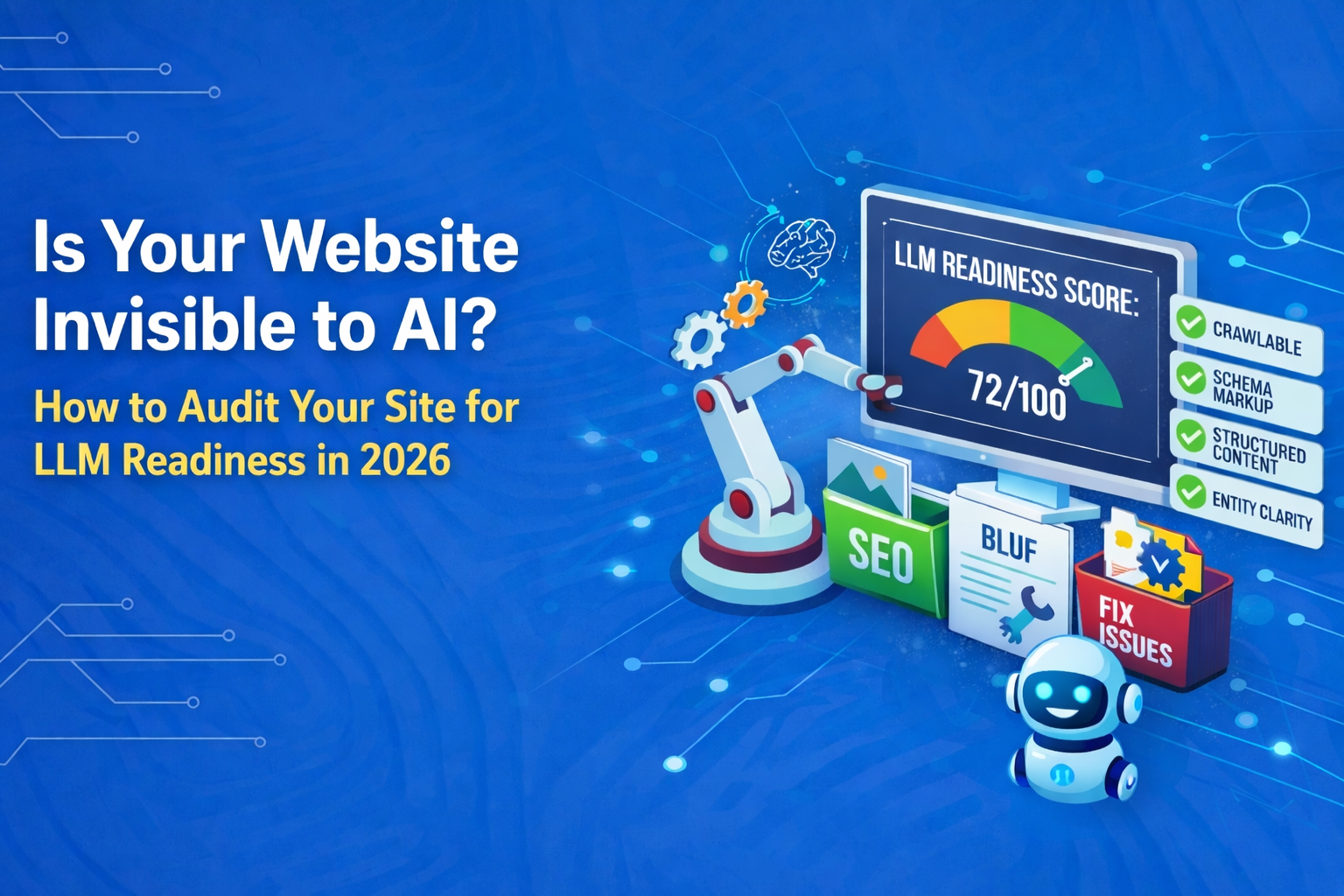
For decades, digital success meant ranking on page one of Google. In 2026, that alone is no longer enough.
With ChatGPT surpassing 800 million weekly users and AI Overviews appearing in over 50% of searches, a new visibility barrier has emerged:
It’s not just about whether people can find your site.
It’s about whether AI can understand and recommend it.
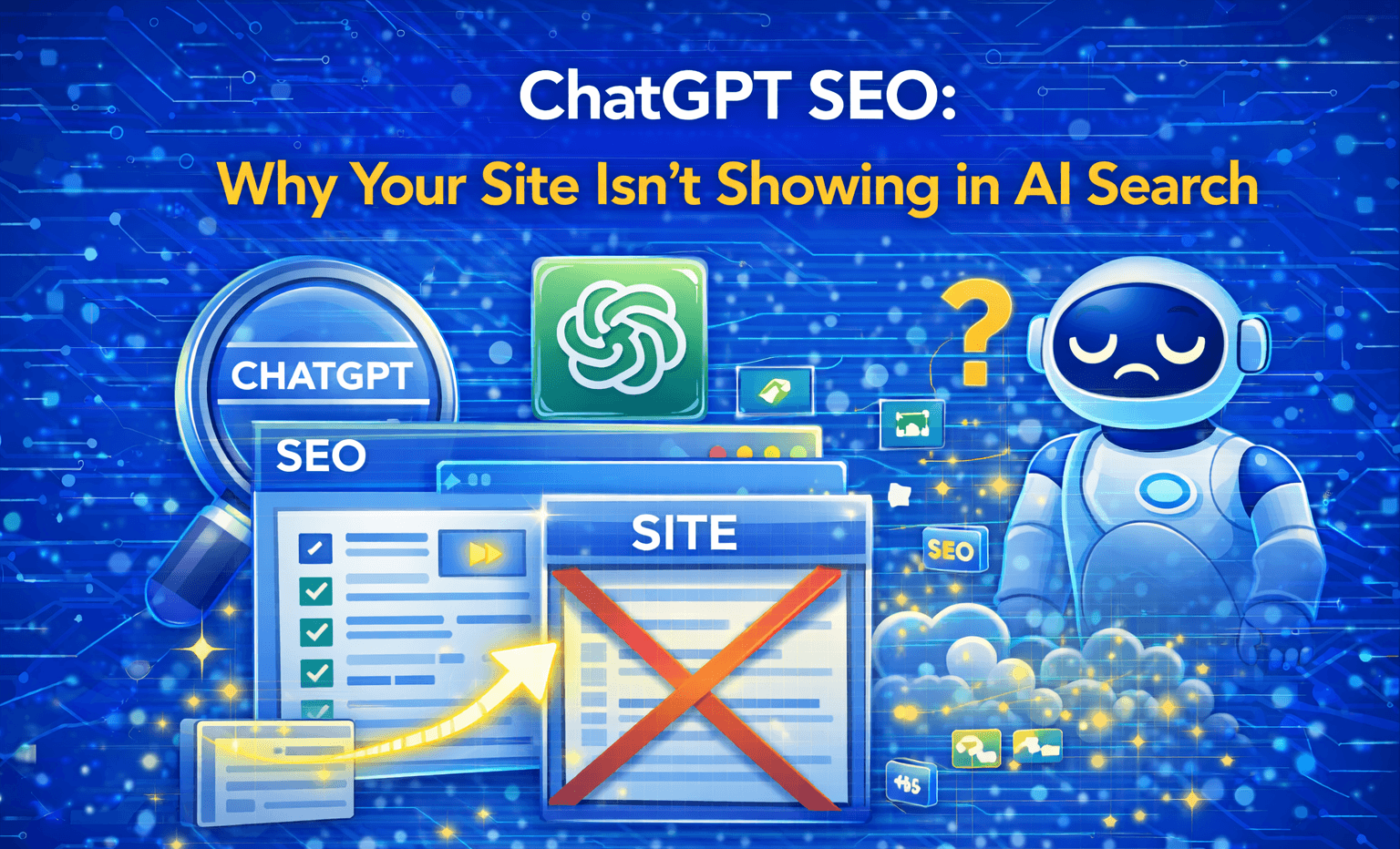
If your website isn’t optimized for Large Language Models (LLMs), your brand may be invisible to a massive and fast-growing audience.
This guide explains how to run an LLM readiness audit and future-proof your visibility in the age of generative search.
Bottom Line Up Front (BLUF)
If AI cannot easily crawl, understand, and trust your website, it will not cite your brand in AI-generated answers — and you lose high-intent traffic before users ever click a link.
What is an LLM Readiness Audit?
An LLM readiness audit evaluates how easily AI systems can access, interpret, and cite your website.
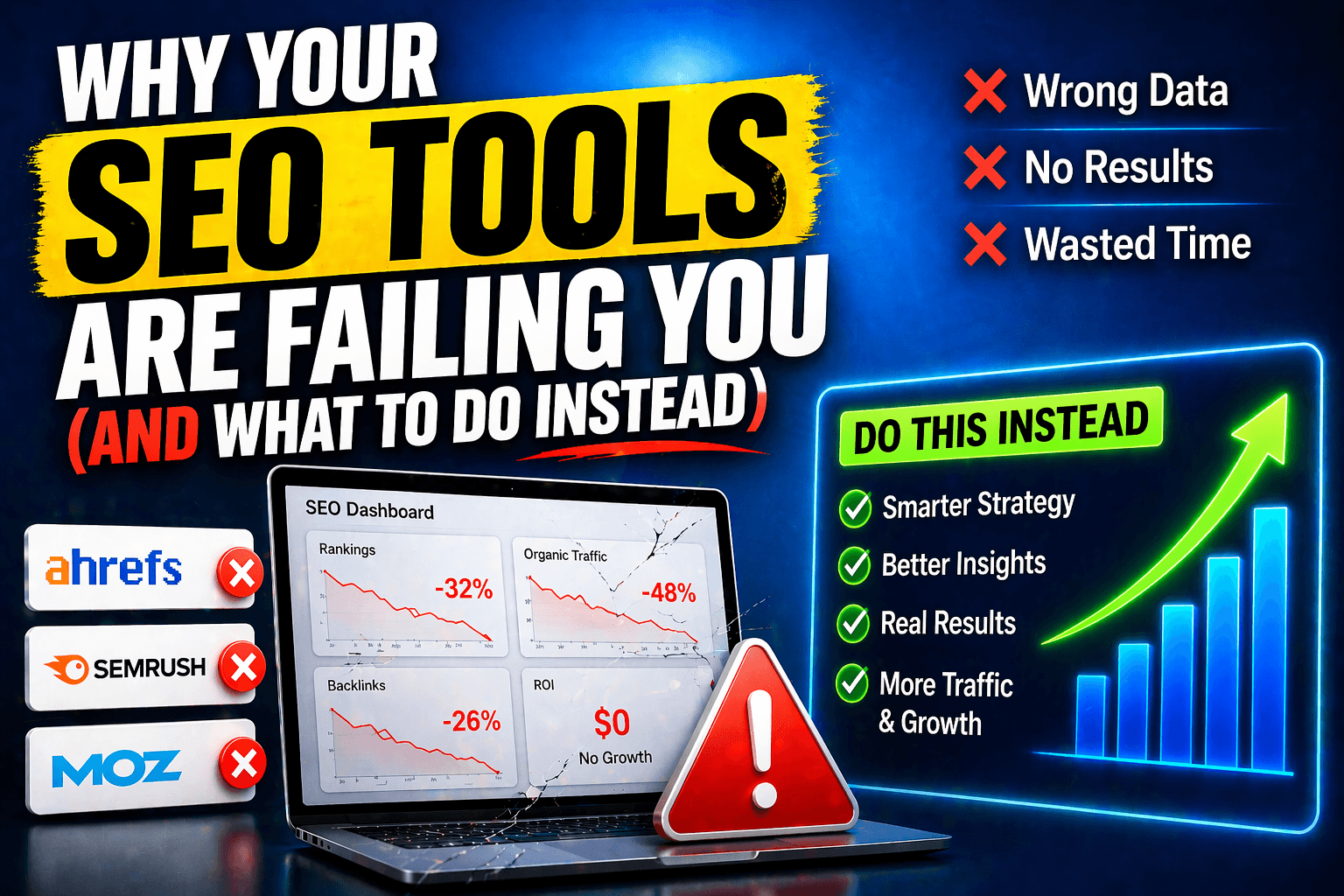
Unlike traditional SEO audits (which focus on backlinks and keyword rankings), an AI audit examines:
- machine readability
- structured data signals
- entity clarity & trustworthiness
- content summarizability
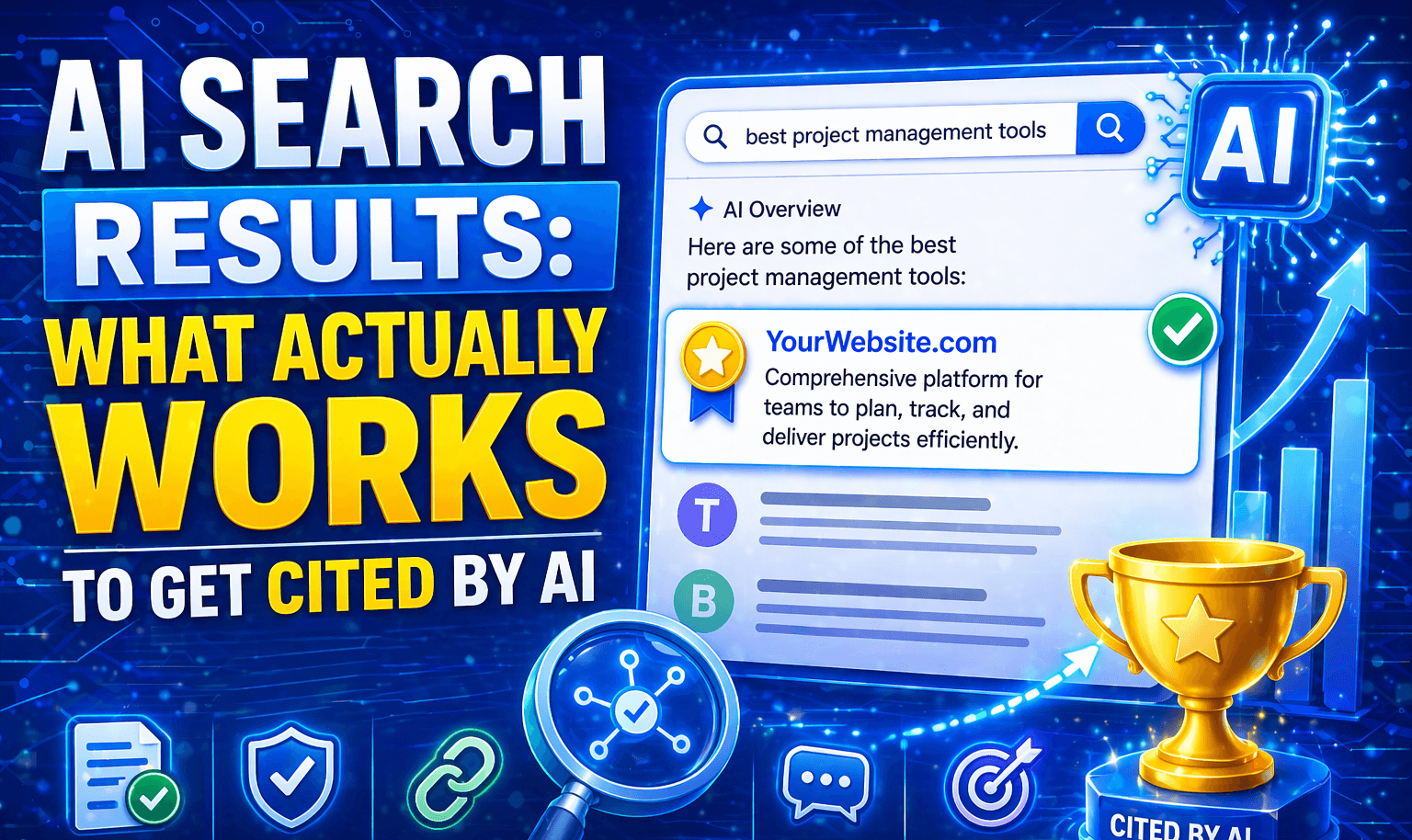
When a user asks:
“What are the best project management tools for remote teams?”
AI systems don’t just match keywords — they prioritize structured, authoritative entities they can confidently cite.
The 5 Pillars of LLM Readiness
1. Crawlability
Can AI bots access your content?
- Allow GPTBot and other crawlers
- Avoid blocking key content in
robots.txt - Ensure important text isn’t hidden behind scripts
2. Schema Markup
Structured data tells AI exactly who you are.
- Implement JSON-LD schema
- Use Organization, Product, FAQ, and Article markup
- Add OpenGraph and metadata
3. Content Structure
AI favors structured, skimmable information.
- Clear headers (H1 → H3)
- Direct answers under each heading
- Bullet points and concise paragraphs
4. Entity Clarity
AI must clearly understand your brand identity.
- Use one consistent brand name
- Maintain the same company description everywhere
- Build mentions on authoritative platforms
5. Token Efficiency
LLMs prioritize concise, direct answers.
- Use BLUF (Bottom Line Up Front)
- Answer key questions within the first 100 words
- Avoid long introductions before delivering value
Pro Tip: Tools like LLMAudit.ai can analyze these signals in seconds and highlight visibility gaps.
Why Traditional SEO Alone Is No Longer Enough
Search behavior is shifting rapidly. Industry projections suggest 25% of traditional search queries will move to AI chat interfaces by the end of 2026.
What’s changing:
Higher-quality traffic
Visitors from AI citations are 4.4× more qualified than traditional search traffic.
The Zero-Click Reality
AI answers often eliminate the need to click links.
If your brand isn’t cited, you’re invisible.
Curation Trust
Users increasingly trust AI summaries over lists of ads or links.
How to Run an AI Website Audit with LLMAudit.ai
If you want to benchmark your visibility, follow this process:
Step 1: Enter Your Domain
Visit LLMAudit.ai and paste your URL.
No login or credit card required for the initial scan.
Step 2: Review Your AI Readiness Score
You’ll receive a 0–100 score evaluating:
- crawlability
- structured data
- content summarizability
- entity strength
Step 3: Prioritize Fixes
Critical errors — such as blocking AI crawlers — are flagged for immediate action.
Step 4: Monitor & Re-Audit
AI citation logic evolves frequently.
Re-audit quarterly to maintain visibility.
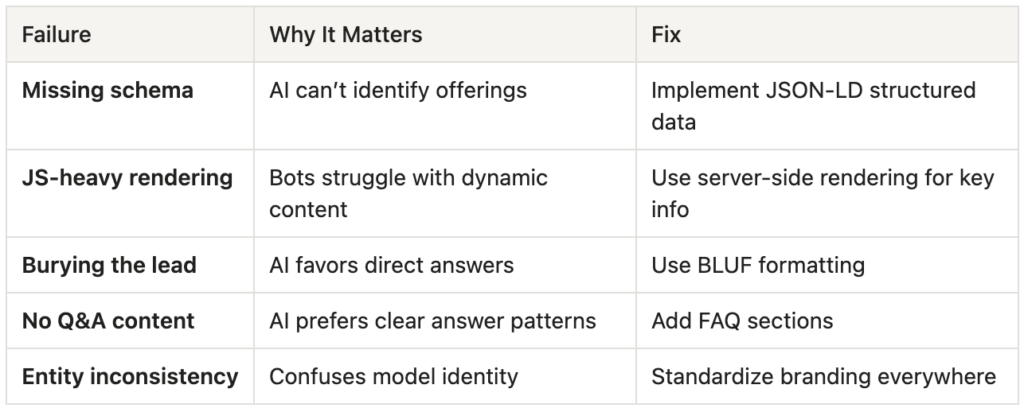
The 5 Most Common LLM Readiness Failures
Conclusion: Visibility in the AI Era
AI-driven discovery is not the future — it is happening now.
Organizations optimizing for LLM readiness today are securing:
- stronger brand authority
- higher-intent traffic
- long-term discoverability
Those who ignore it risk becoming invisible.
Traditional SEO focuses on improving rankings in search engines like Google. An AI audit evaluates how easily Large Language Models can understand, summarize, and cite your content.
SEO helps you get discovered. LLM optimization improves citation likelihood inside AI-generated answers.
Yes. AI Overviews and generative search systems often pull information from top-ranking organic pages.
SEO builds visibility, while LLM readiness ensures your brand gets cited once discovered.
The initial scan is free and does not require signup. It provides a baseline AI readiness score and highlights critical visibility issues.
AI-friendly websites are easy to crawl, include structured data, maintain consistent brand identity, and present information in a clear, concise format.
Because AI citation logic evolves rapidly, it is recommended to audit your site quarterly and whenever major content or technical changes occur.
Yes. AI search prioritizes clarity and trust signals over domain size, allowing smaller brands to compete effectively if their entity signals and content structure are strong.