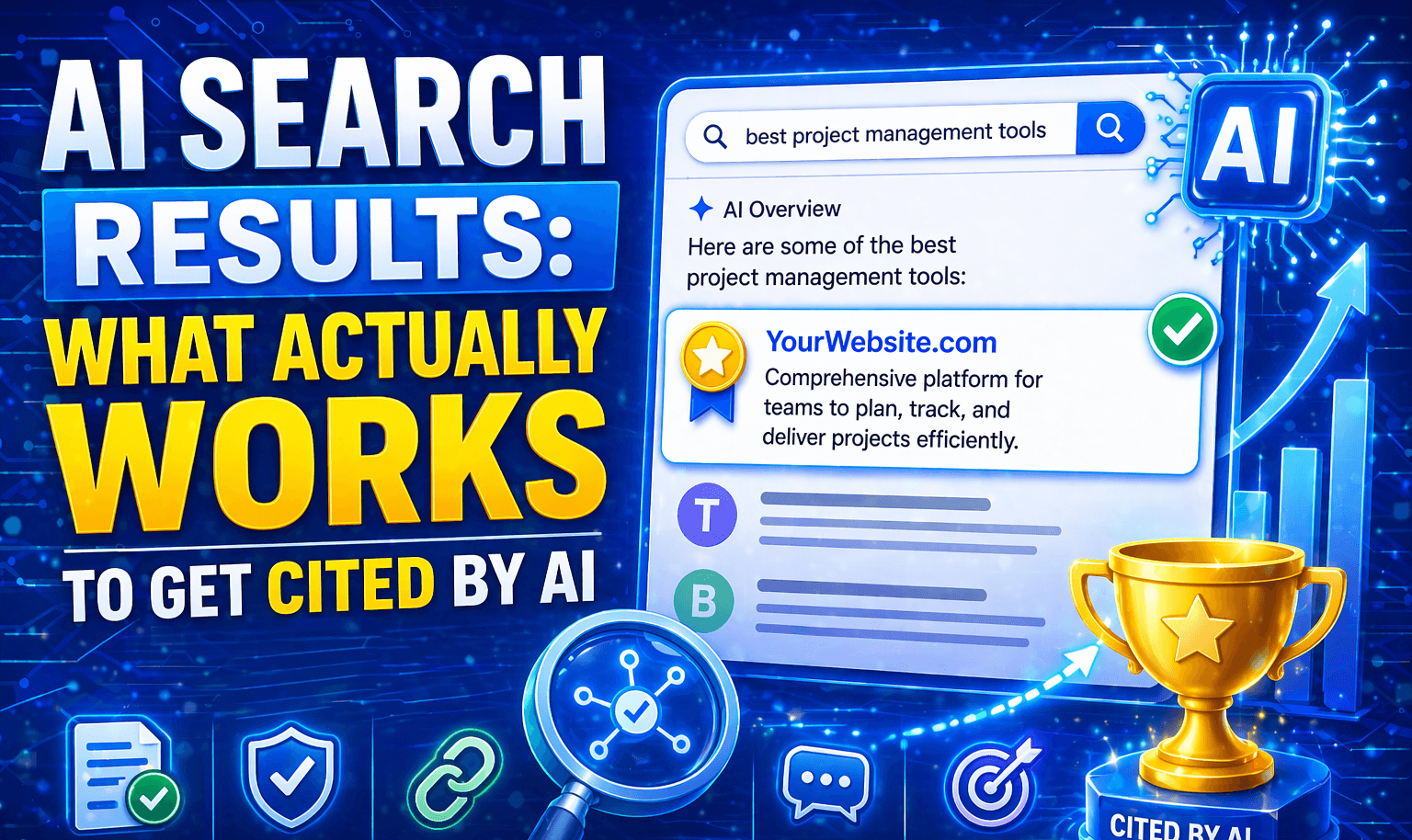
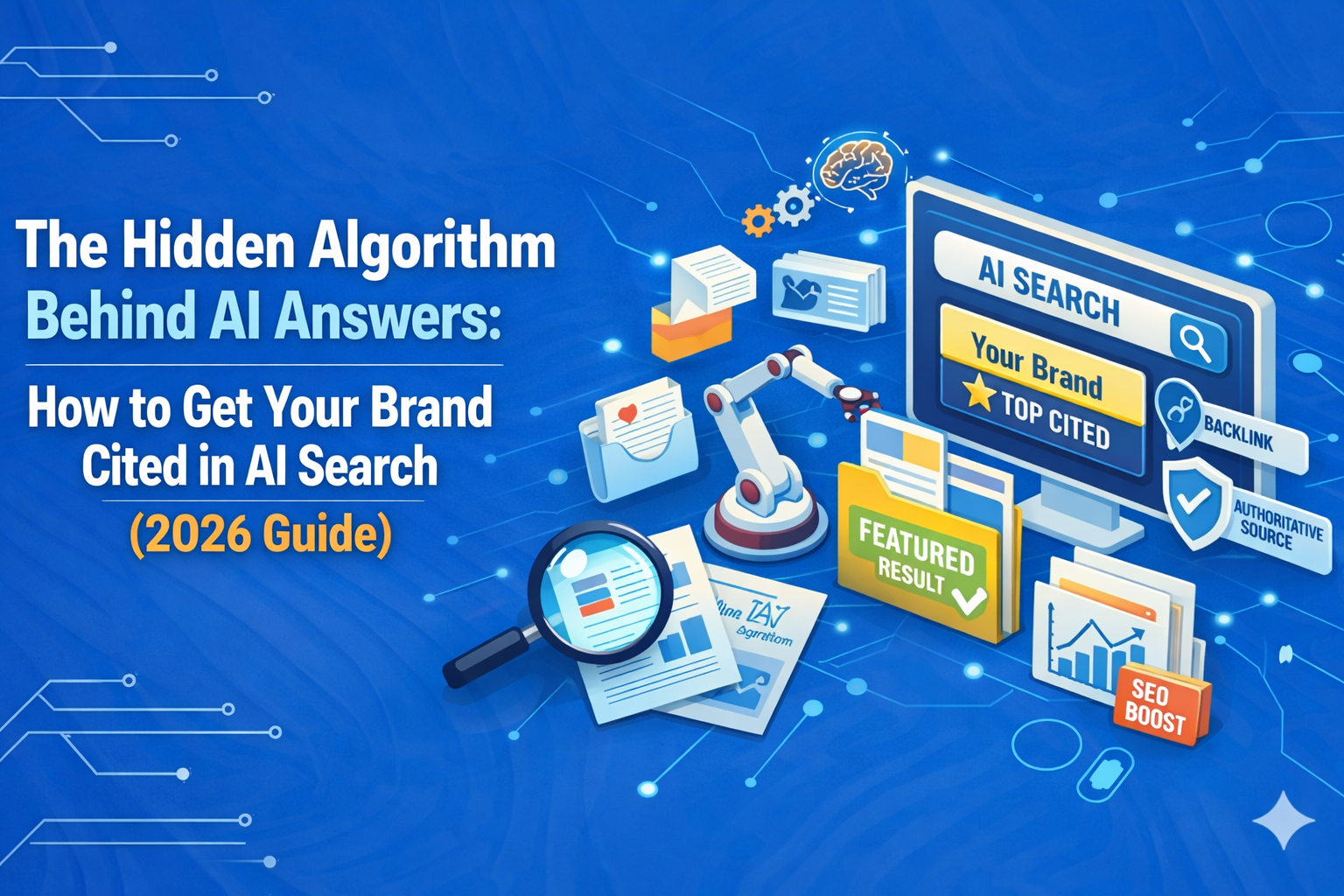
Artificial intelligence–driven search experiences are changing how people discover information online. Instead of scrolling through links, users now receive synthesized answers that cite sources considered trustworthy, relevant, and useful. This shift is redefining visibility. Ranking on search engines is no longer the only goal; becoming a trusted source that AI systems reference is the new benchmark of authority.
For startups, creators, and businesses, understanding how AI answer engines select sources can provide a significant competitive advantage. This guide explains the mechanics behind AI citations and provides a structured framework for positioning your brand to appear in AI-generated answers.
Why AI Citations Matter More Than Rankings
AI-powered answers compress research time for users. When an AI response cites a source, it transfers trust and authority to that source instantly. Users perceive cited sources as verified, credible, and useful.
This creates three powerful benefits:
- increased brand trust
- higher click-through intent
- long-term authority positioning
Traditional search rankings generate traffic. AI citations generate trust and influence.
How AI Answer Engines Choose Sources
AI systems evaluate content using multiple trust and usefulness signals rather than relying solely on keywords.
Authority and Credibility Signals
AI systems favor content backed by recognized expertise, institutional credibility, or verified references. Government agencies, academic institutions, established research organizations, and expert-led publications often appear because they demonstrate consistent reliability.
For brands, this means publishing research-backed content, citing credible sources, and maintaining factual accuracy strengthens authority signals.
Clarity and Direct Answers
AI engines are optimized to satisfy user intent quickly. Content that provides direct answers to specific questions performs better than long, unfocused narratives.
Pages that define concepts clearly, explain processes, compare options, or provide step-by-step solutions align with how AI delivers answers.
Structured and Extractable Content
Well-structured content improves both readability and machine extraction. AI systems favor content organized with clear headings, logical flow, concise paragraphs, and structured comparisons.
When information is easy to extract, it becomes easier for AI systems to interpret and cite accurately.
Community Signals and Real-World Experience
AI answers increasingly incorporate real-world experience alongside expert knowledge. User discussions, reviews, and firsthand insights provide context that enhances practical relevance.
This is especially influential in product decisions, travel, troubleshooting, and lifestyle queries.
Encouraging authentic user feedback and discussions strengthens credibility signals.
Multimedia and Visual Learning
Video tutorials and visual explainers simplify complex concepts. AI systems often reference multimedia sources when visual learning enhances understanding.
Brands that create instructional videos and visual walkthroughs increase their chances of being cited for explanatory queries.
Freshness and Timeliness
For fast-evolving topics such as finance, technology, and markets, AI systems may prefer recently updated content. Fresh insights ensure responses reflect current realities.
Regular updates and timely analysis improve citation potential.
Trust Signals vs. Visibility: What AI Prioritzes
The chart below illustrates the relative influence of major factors affecting AI citations.
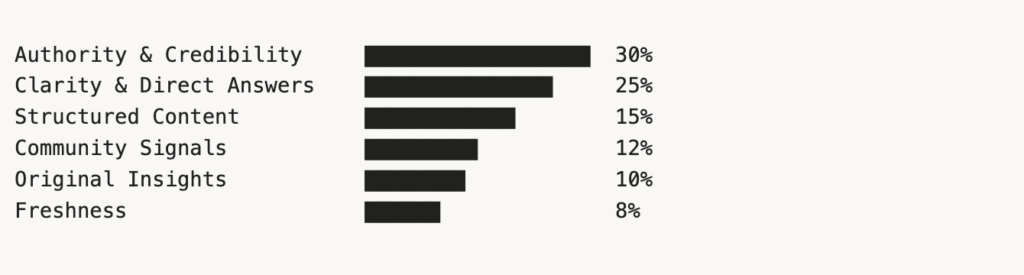
Authority and clarity form the foundation, while community trust and originality strengthen visibility.
Why Some Brands Appear Frequently in AI Answers
Brands that appear consistently in AI responses share common characteristics. They publish authoritative and well-researched content, provide clear explanations, maintain visibility across multiple platforms, and are discussed by real users. They also contribute original insights rather than repeating widely available information.
AI visibility is the result of a trust ecosystem rather than a single optimization tactic.
The AI Visibility Framework
Achieving citations requires a strategic approach that combines authority building, content clarity, and ecosystem presence.
Build Authority in Your Niche
Authority develops through credibility and expertise. Publishing research-backed articles, incorporating data, providing case studies, and offering expert commentary establish reliability.
Authority builds trust, and trust increases citation probability.
Create Answer-Focused Content
Content should address specific user questions rather than broad topics. The most effective pages answer the primary question early, use simple language, and provide actionable insights.
Question-driven content aligns naturally with AI query patterns.
Expand Presence Beyond Your Website
AI systems draw insights from across the web. A brand that appears in professional networks, knowledge-sharing communities, video platforms, and review ecosystems signals legitimacy and relevance.
A multi-platform presence strengthens recognition and trust.
Encourage Discussion and Mentions
Public discussion reinforces credibility. Reviews, Q&A mentions, user experiences, and community conversations create signals that your brand is relevant and trusted.
Authentic engagement is more effective than promotional messaging.
Publish Original Data and Insights
Original research significantly increases citation potential. Market reports, surveys, trend analyses, and case studies provide unique value.
AI systems prioritize original insights because they enrich answer quality.
Leverage Video and Visual Content
Educational videos, explainers, and walkthroughs improve comprehension and discoverability. Visual content enhances authority and complements written content.
Strengthen Trust Signals
Including author credentials, demonstrating real-world experience, maintaining transparency, and citing sources improves credibility. Trust develops through consistent reliability.
Content Formats Most Likely to Be Cited
AI systems favor formats that deliver clarity and immediate value.
High-performing formats include:
- step-by-step guides
- concept explanations
- comparisons and breakdowns
- myth versus fact analysis
- expert insights
- practical how-to content
Content that prioritizes user understanding over promotion performs best.
Common Mistakes That Reduce Citation Potential
Avoid practices that weaken credibility or usefulness.
- excessive promotional language
- vague or generic writing
- outdated information
- unsupported claims
- keyword stuffing
AI systems prioritize clarity and reliability over marketing language.
AI Visibility Funnel
The pathway from content creation to AI citation can be visualized as a trust funnel.
Create Valuable Content
        ↓
Earn Community Mentions
        ↓
Build Authority Signals
        ↓
Gain Trust & Recognition
        ↓
Appear in AI Citations
Each stage reinforces the next, building cumulative credibility.
Future of Search: From Ranking to Referencing
Search is evolving from ranking pages to referencing trusted answers. Context and intent now outweigh keyword matching. Credibility and usefulness are becoming more influential than backlinks alone.
Brands that focus on educating, informing, and solving real problems will gain long-term visibility advantages.
Final Thoughts
Appearing in AI-generated answers requires more than traditional SEO tactics. It requires building trust, delivering clarity, and providing genuine value across multiple platforms.
Brands that prioritize usefulness, credibility, and real expertise will shape the future of discovery in the AI-first internet. If You Want To Know About : Best GEO & LLM Optimization Tools to Rank in AI Answers in 2026 & For Tracking & Analysing The AI Visibility of your Brand Visit : Semrush & LLMAudit.ai